
Isn’t June great? I’ve decided to hang out with June for as long as possible, so bear with me for yet another post on what’s possibly my favorite month.

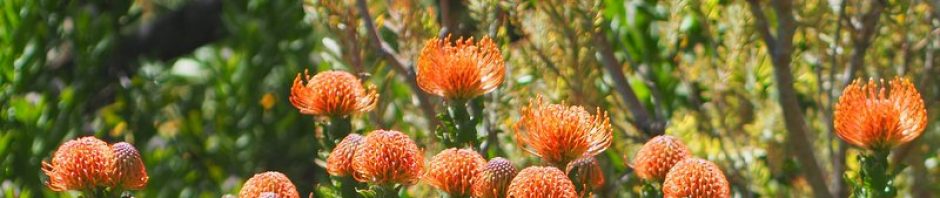
Looking at other June gardens is a great way to find unfamiliar but promising plants. It’s also massively instructive to observe familiar plants in growing conditions different from those at home. I popped in briefly at the Wonder Garden last week and found some stellar performances by plants in June that are doing absolutely nothing in my garden yet. The heat and berms with freer drainage make all the difference for plants like eryngiums and berkheya here at the coast. My struggling berkheya was moved this spring for some breathing room on an open edge. It is alive, but feast your eyes on what a happy berkheya looks like in bud, leaf, flower and stem.

The flowering shoots on my Eryngium paniculatum are just now swelling, whereas in Manzanita it’s in full-on flower. It’s a little confusing to find this eryngo occasionally described as a towering giant. Flowering to 3 feet is what I’ve observed, both at home (eventually) and at the Wonder Garden. There might be some confusion afoot with the tall Eryngium eburneum, but I’m not sure who’s got it right. Adding to the confusion, sometimes the names are treated as synonyms. Could they be the same plant, with height variations due to seed strain and geographic location of seed collection? I just brought home Eryngium eburneum from Cistus Nursery (along with Euphorbia ceratocarpa!) so in time I may be able to compare for myself.


Also newsworthy at the Wonder Garden, the heirloom Dianthus ‘Chomley Farran’ has finally hit its stride after malingering for years. Exquisite as a cut flower, it flops about a bit in the garden. A survivor of the 18th and 19th century craze for “bizarre” carnations, it’s a living embodiment of the changing tastes and fascinating idiosyncrasies that occasionally erupt throughout horticultural history.


At home Gladiolus ‘Ruby’ began opening the last couple days. Here’s a bulb that’s done some traveling. Ordered from a grower in the UK in 2014, it’s been speared and disturbed since that time, a casualty of the zone 10 garden’s frequent upheavals and changes in direction. This April I noticed bulb foliage nosing up in a path. The shape of the leaf indicated either the inferior strain of Byzantine gladiolus that proliferates in the garden or the choice ‘Ruby.’ Having already stepped on the emerging foliage repeatedly, I dug up the pathway bulbs and brought them north for a chance to reveal their true identity. These are what are in bloom now. Looking at the photos in the link provided, it’s pretty clear where this bulb is happiest.


And that’s the last post in June, promise. More soon, AGO.