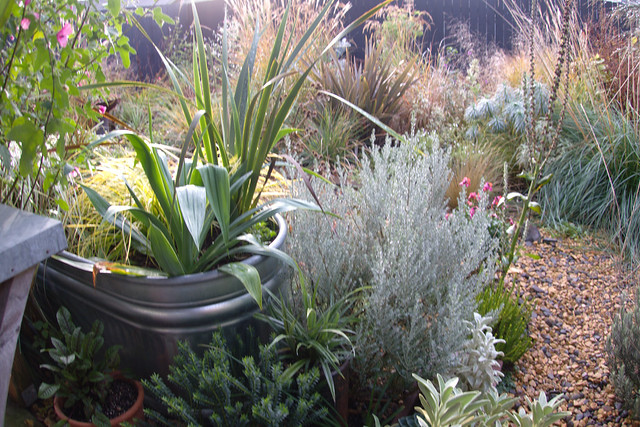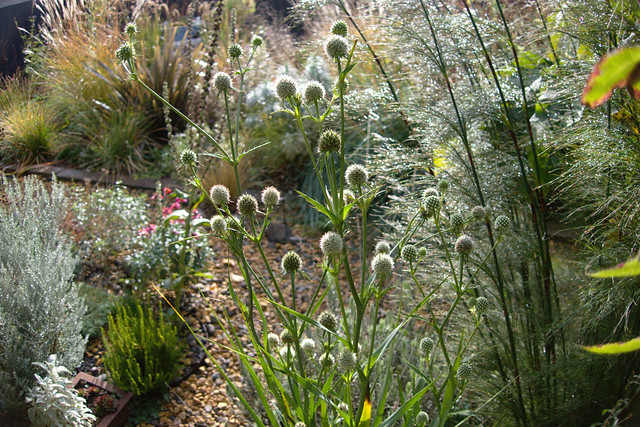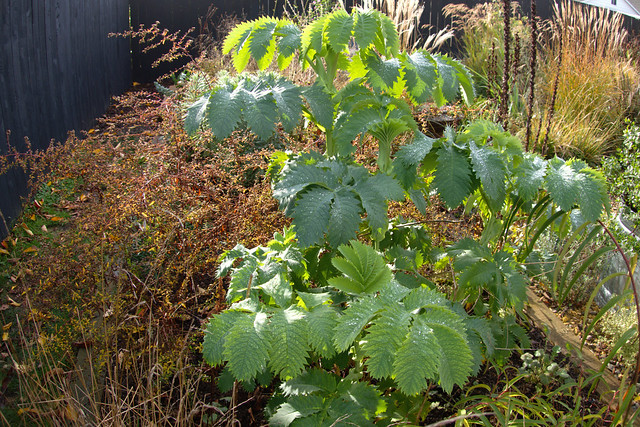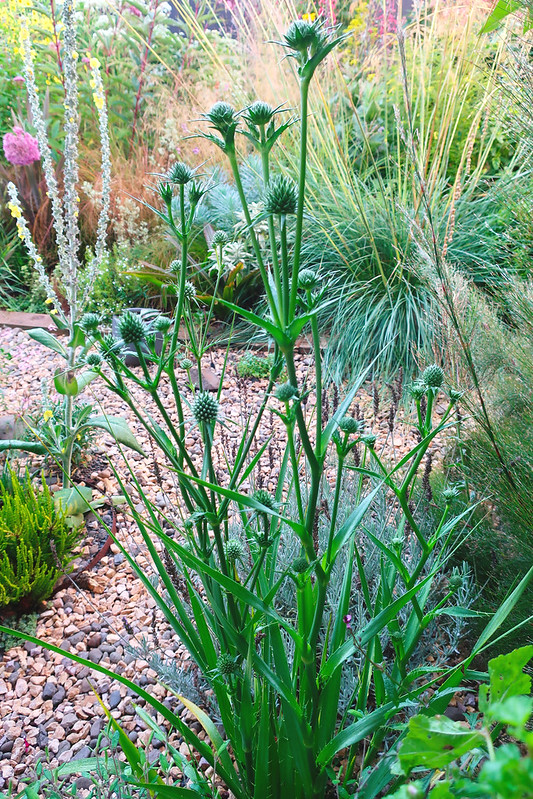
I apologize up front for the contrasty results of my point-and-shoot on this brilliantly sunny morning, but it will be too dark for photos within the hour under these temperamental skies. (This is as far as the working collaboration with my camera goes in difficult light conditions. I was very gratified to learn that Patti Smith once confessed she had no idea what she was doing with a camera either.). But I think the general sense of how the garden coped with the ice storm is conveyed, and that’s good enough for my own recordkeeping. To wit, in the photo below, everything in this stock tank seems fine: Arctostaphylos ‘Sunset’ (still holding onto and opening flowers), restio Chondropetalum tectorum, and golden blur in the background Cassinia leptophylla. Shrub in the ground to the right is Hebe ‘Western Hills.’ Clockwise from the hebe is Eryngium agavifolium, with bottom center an asphodel bought local, mostly likely A. lutea. I thought the freeze would cull out the zillions of Omphalodes linifolia seedlings, but no, they all still appear to be there, needing thinning by me.
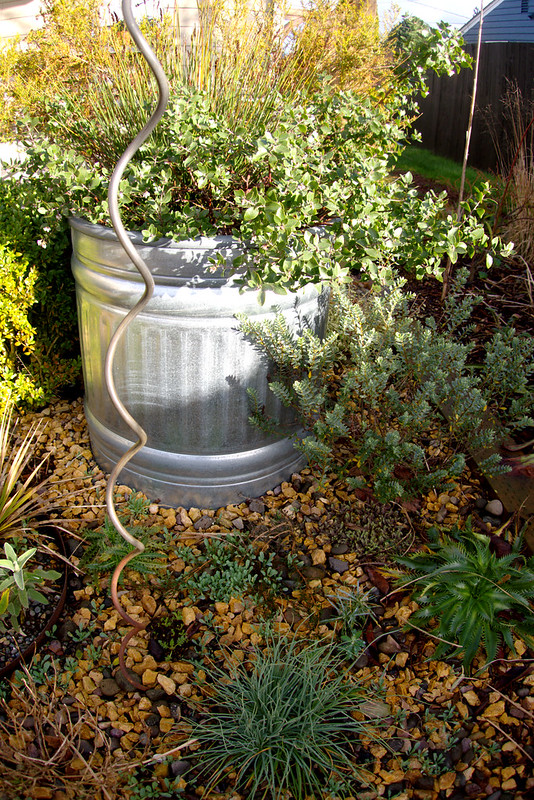
I haven’t planted much that can’t take a zone 8 winter unprotected, but saturated soil combined with the unusual ice conditions had me worried not so much about plant losses, but ugliness issues. And on that score, it could’ve been worse. The only outright death was a Lavandula ‘Goodwin Creek Gray,’ nothing to cry about.

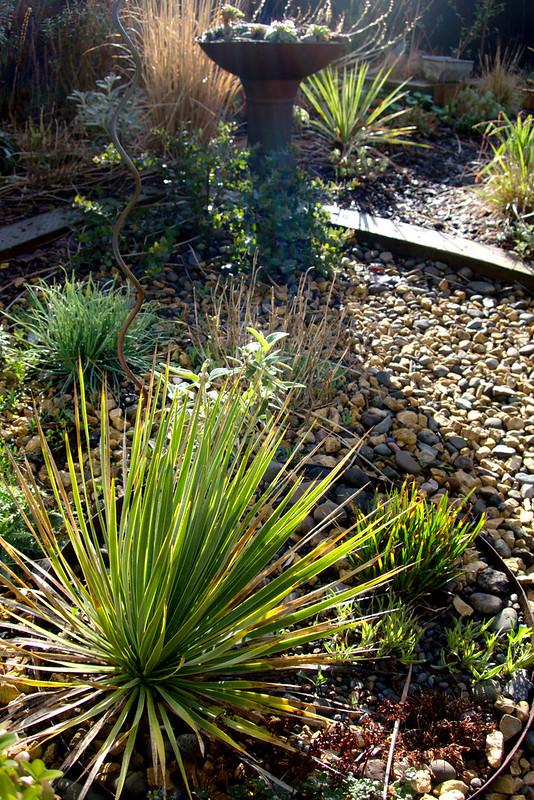
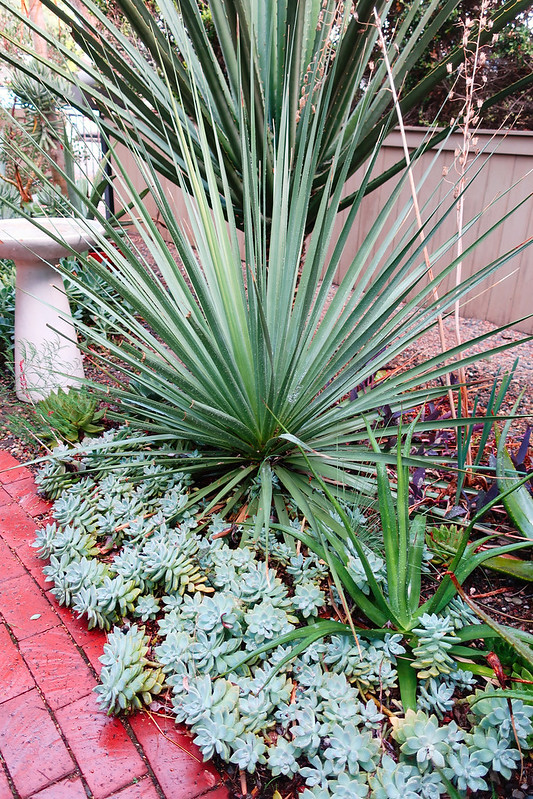
My small-sized Yucca rostrata are fine, even the distant one under the planter which was moved in the fall. At the planter’s base is an Arctostaphylos ‘Pajaro’ planted in 2023 retaining good color and no die-off. (And in the bowl of the planter, surprisingly a small Echeveria agavoides survived! Reputedly hardy to 14F, and we did not achieve that low here.)


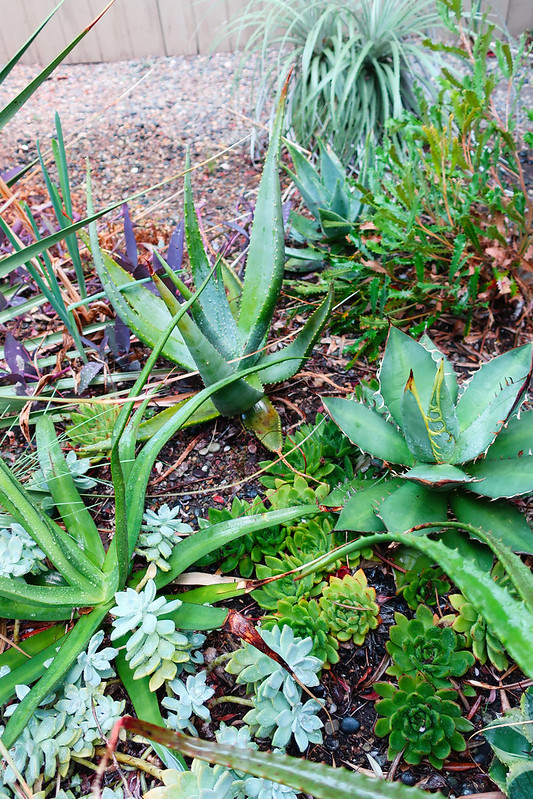
The most detailed protections were made for this beschorneria and the strappy aristea. The prospect of waiting for them to outgrow severely blemished leaves was incentive enough to build a cardboard tent, which worked well. The leaves are mostly pristine.
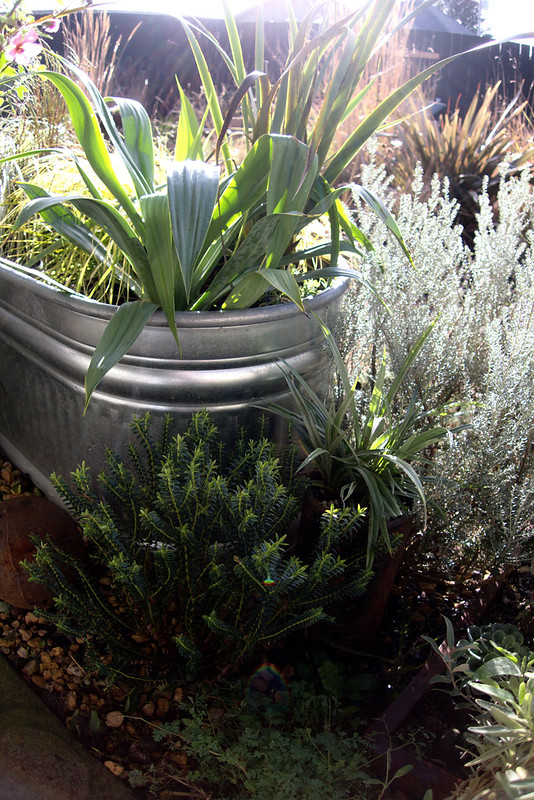
The hebe in the foreground is ‘New Zealand Gold.’ Astelia chathamica looks none the worse for wear in its pipe.
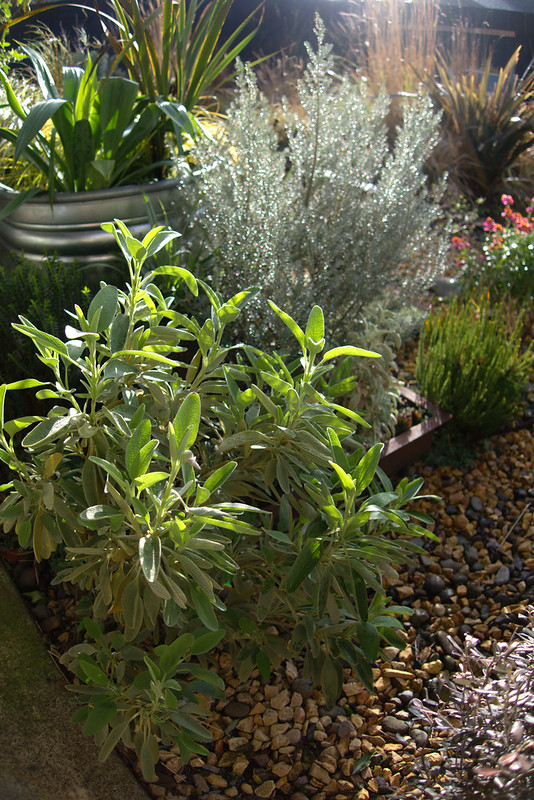
Phlomis monocephala grows up against the concrete patio, slightly under the overhang, and seems to have come through the ice fine, as have all the phlomis. Silvery shrub is Cassinia x ozothamnus.

Also protected in this area was the sideritis, with an overturned bucket. I lost all top growth in the April 2023 snowstorm and was hoping to hang on to this growth, if possible. Looks good so far.
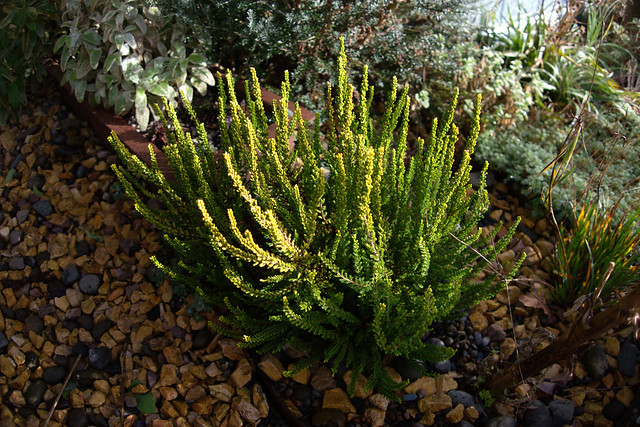
Just forward of the sideritis, hardiness of Calluna ‘Skyline Barcelona’ was not really in doubt, but it still surprises me that it looks this fresh after the ice ordeal.
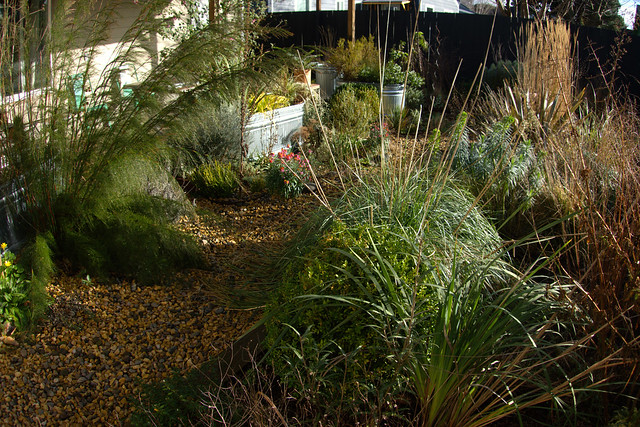
Looking east between stock tanks and the garden. Rhodocoma capensis’ icy performance was interesting to observe but thankfully not damaging. (The third stock tank unseen behind the restio holds mostly winter dormant plants.)
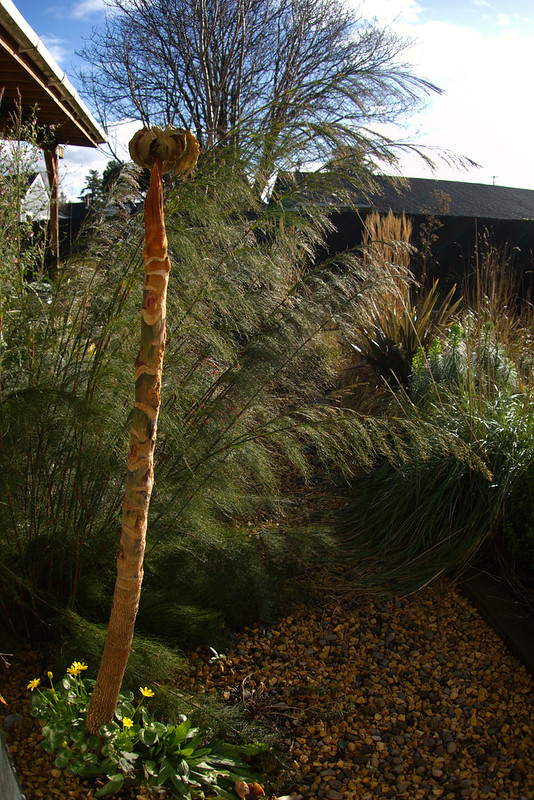


The garden-side planting in front of the middle stock tank (with the beschorneria). No losses in the ground here. Rosette is Kniphofia hirsuta, to zone 6.
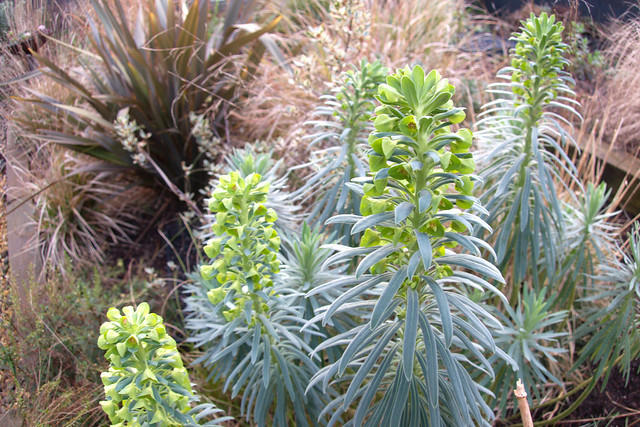
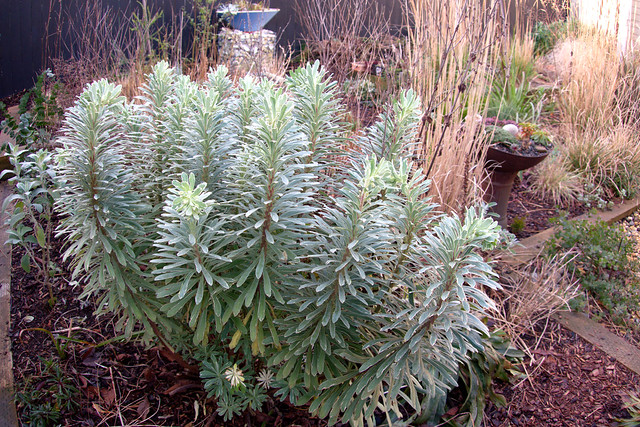


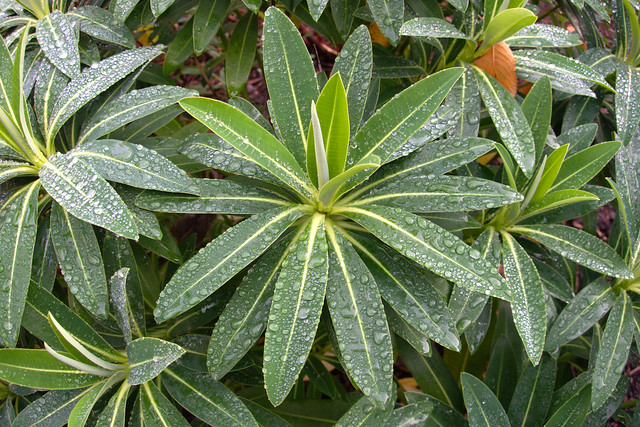
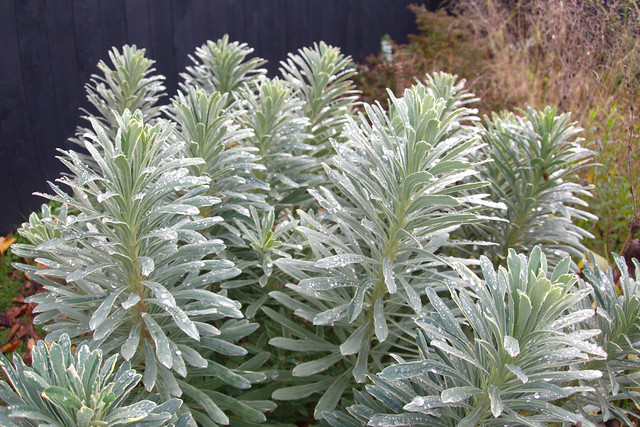
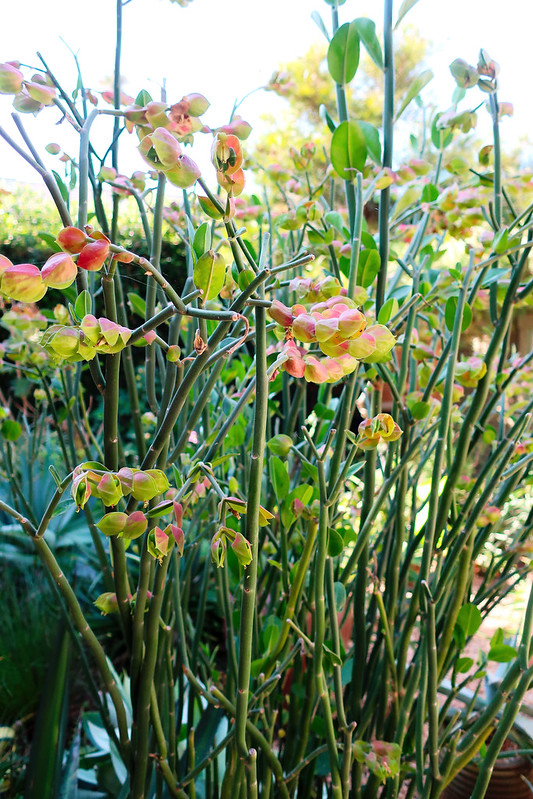
After the ice storm, Euphorbia stygiana is probably as shabby as I’ve seen it in two winters, but alive. Many of the branches were bent, but I’ve left them to die in place to protect the new growth at the base. Confoundedly, they aren’t dying at all but greening up. 70F last Monday and the bent stems still did not wilt but remained firm. I checked this same euphorbia at the Wonder Garden in Manzanita a couple days ago and it’s in much worse shape, probably from stronger winds, even though it’s technically a warmer spot.
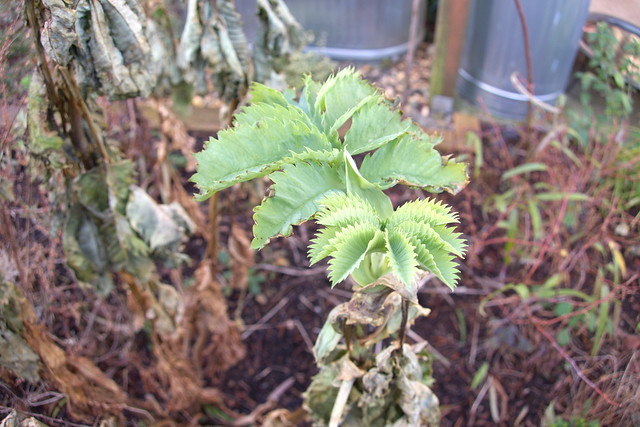

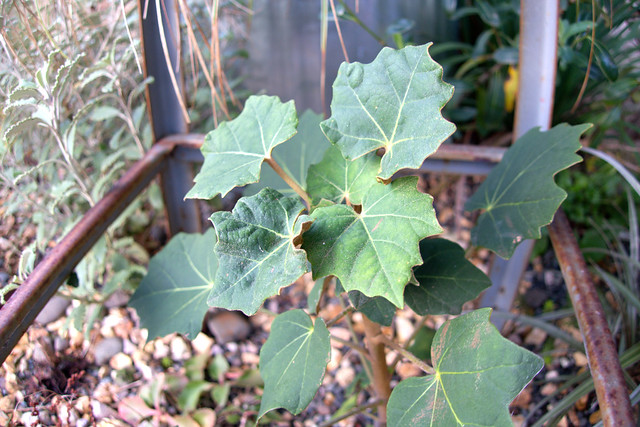
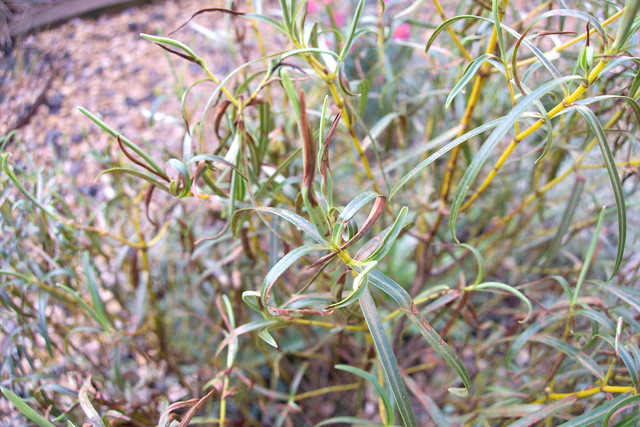
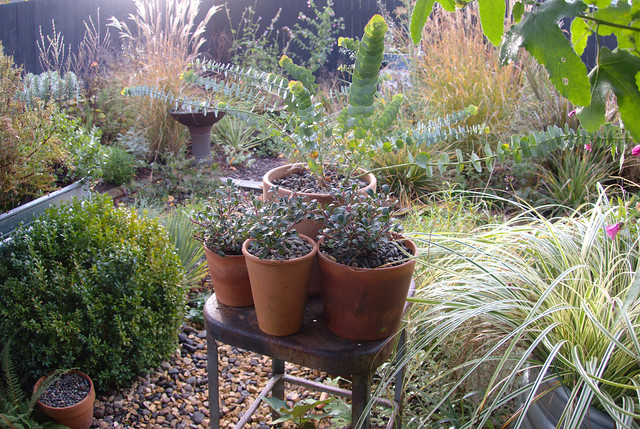
Hebe parviflora angustifolia is sited just in front of the shop stool, and the east winds knocked it back hard. A lush, willowy evergreen, 3X2′ is now a thready mix of green and brown. Apart from losing a lot of leaves, no real damage is visible.
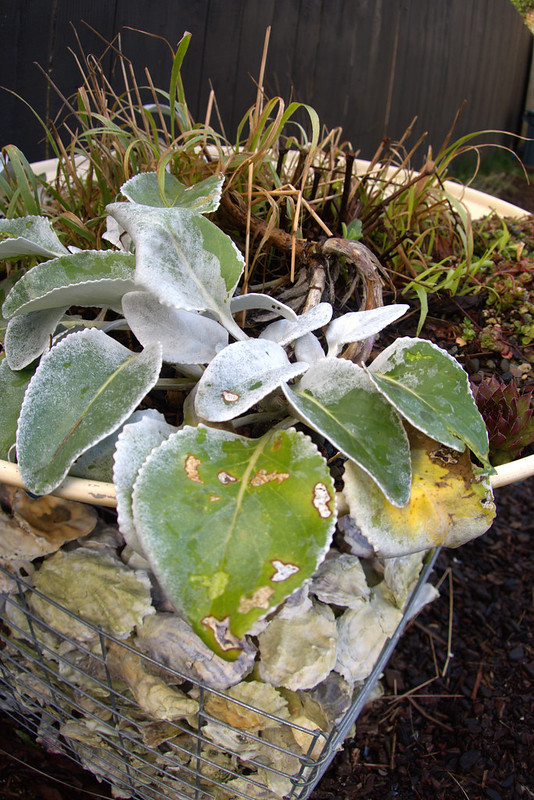
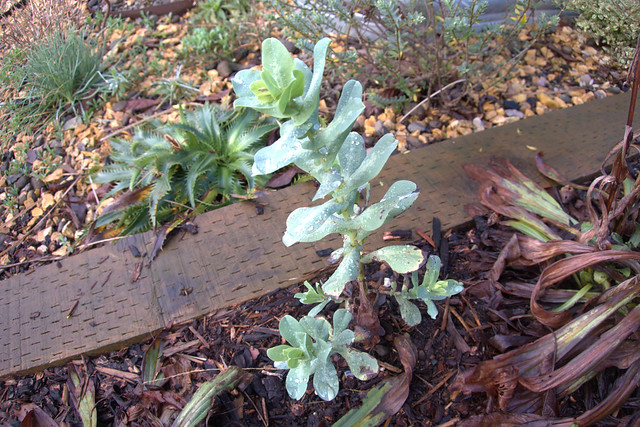

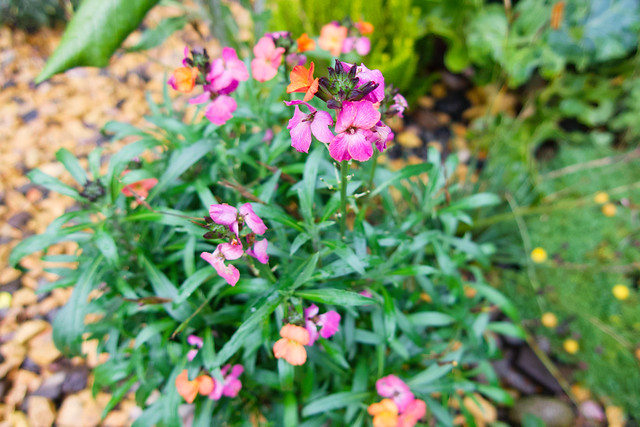
Anisodontea, the Two-Face Shrub. The east side was blackened, and for several days the patio was strewn with fallen black leaves resembling slimy spinach. New growth has already started. The west side of the shrub showed little damage and has started flowering again.