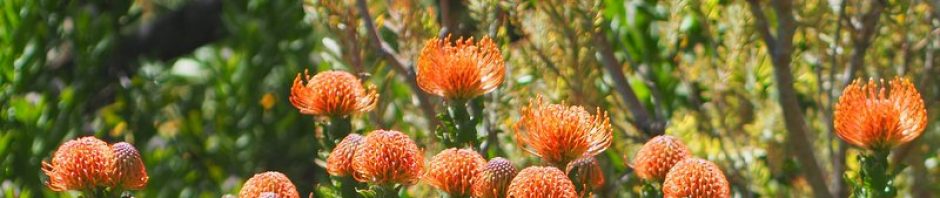

By the end of July the garden is definitely over the top. A surging, buzzing, no-holds-barred spectacle I’ve been looking forward to since spring.


Even Alstroemeria ‘Third Harmonic’ can barely keep up. The Silver Spike grass, Achnatherum calamagrostis, seems to keep it in bounds. The grasses are the glory of this very windy coastal garden.

I do have to brag about the clean lines of my Eryngium pandanifolium. I pulled off so many splaying, crosswise, thorny leaves in spring that I wasn’t sure it would be strong enough to bloom. And here it is with three shoots forming. If you want to grow this big eryngo in a small garden, cleaning up the leaves in spring is the only way. And no lie, it’s a nasty job requiring long sleeves and gloves. Otherwise it will be a sprawlingly annoying and scratchy mess that you will grow to hate as passionately as you once admired it.


While I was away for a week the persicarias swung into action. Obviously preferred by the bees to all else, the persicarias have added incredible vibrancy to the scene. Just standing next to all the noisy thrumming action gets me buzzing with energy too.

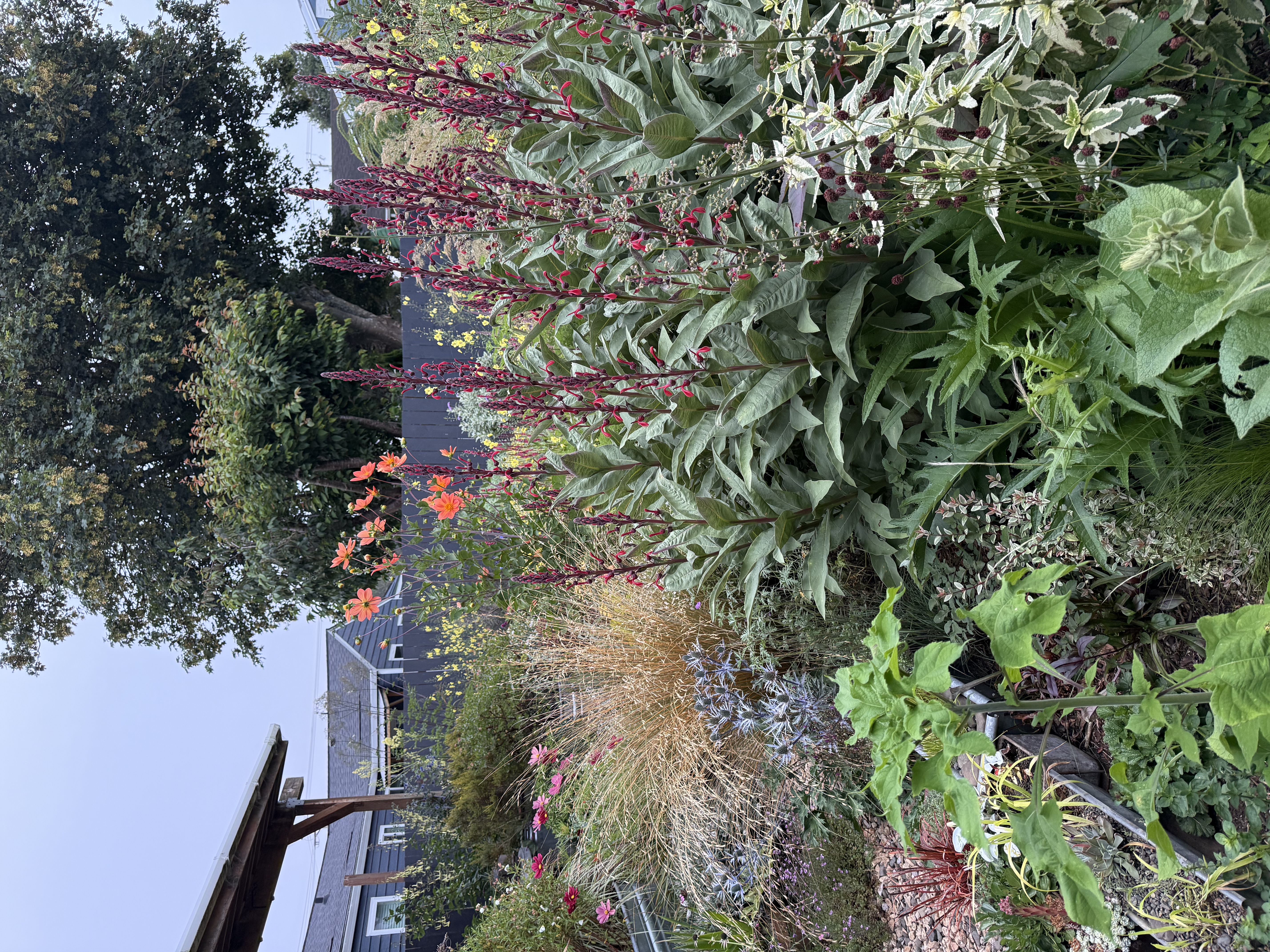
Lobelia tupa is a hummingbird battleground by July. Leafy tower on the left is tithonia, which depending on ultimate size may be too much for this little corner to bear.
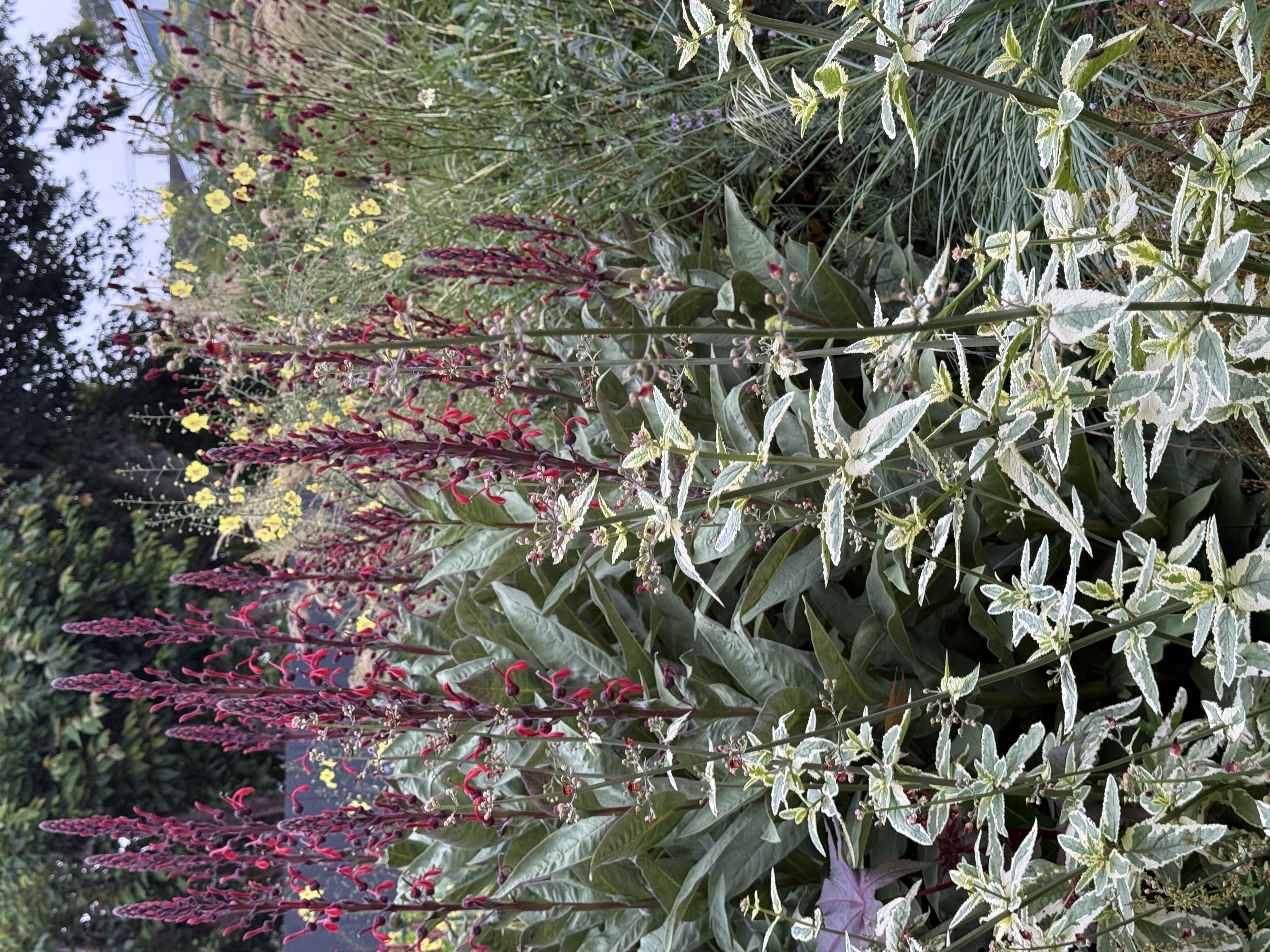

First order of business next spring is dividing Sanguisorba ‘Red Thunder.’ After several years’ growth, its falling-off-the-barstool, lush and leaning ways would be impossible to manage without bronze fennel for support.

This little corner near the east fence somehow became filled with buttery yellows for mid-summer, a gratifying bit of serendipity.


When it became apparent that this kniphofia was not the dwarf torch lily I thought I purchased (K. hirsuta), it was moved out of inappropriately tight quarters. So what was it? This summer has indisputably revealed its identity as Kniphofia northiae, the Octopus Red Hot Poker. The polar opposite of K. hirsuta, the dwarf poker, K. northiae is the giant in the group. Apart from pulling off a few tatty lower leaves, it comes through winter looking like this. (At least last winter, which was mild.) It produced a flower in spring, but it’s really more about the shape and scrollwork of the substantial leaves. And it likes my heavy, wet soil too.
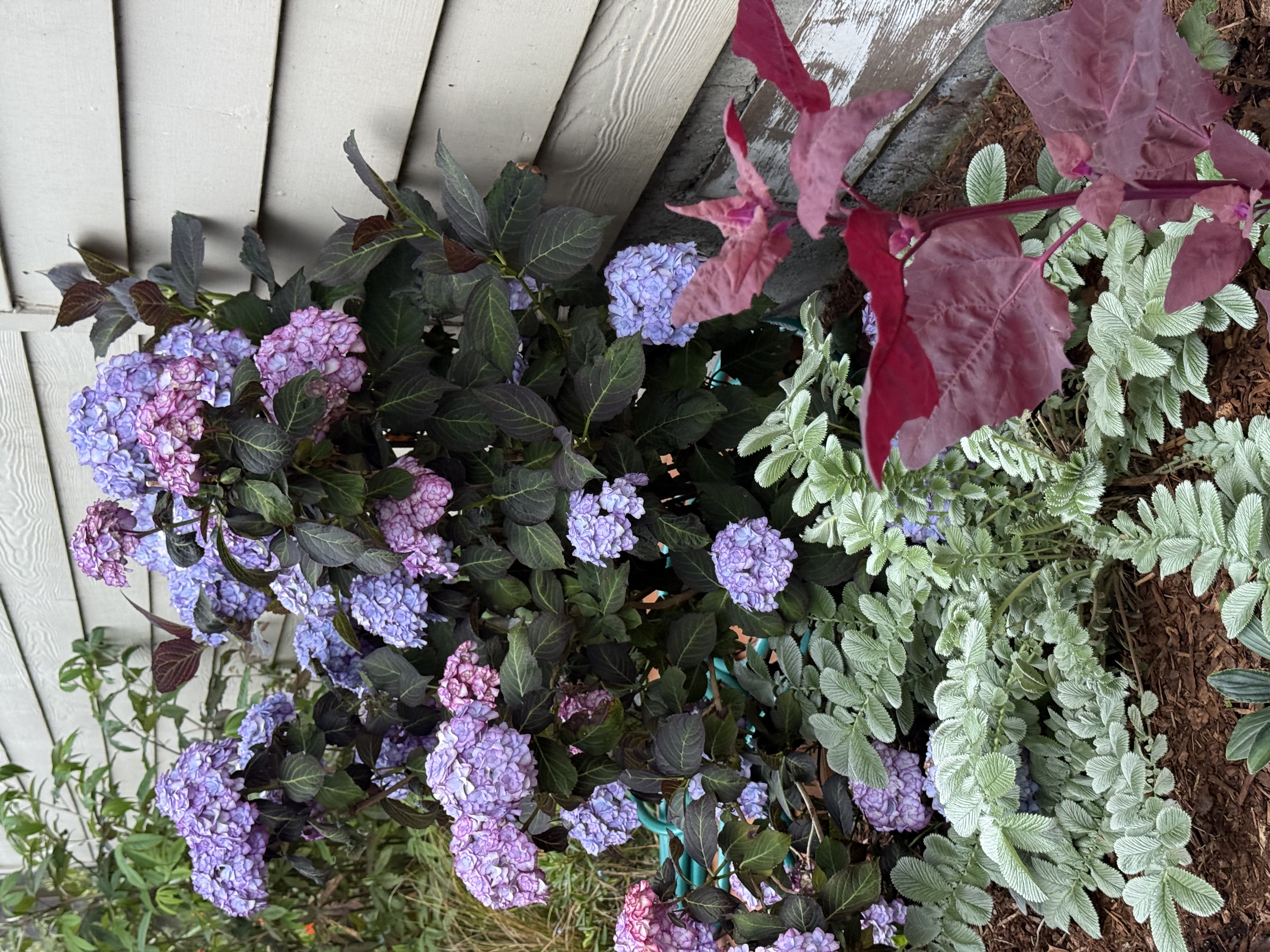
My sole hydrangea, picked up at the local farmers market a few years ago. Dark leaves, picotee flowers give it a novelty look that leaves me uncommitted, but it pretty much grows itself. I could fill the east borders with them, they love the coast that much. Silver-leaved Argentina lineata was moved to the less crowded east side of the house this spring. Over the years I’ve made repeated attempts to get the spinach substitute purple-leaved orach established enough to self-sow in both north and south gardens. Maybe this year does the trick.


I finally secured the sheet of die-cut salvage metal I’ve been eyeing for years at the local welder’s. The owner was never there, no one knew what to charge, etc. etc., but yesterday the stars aligned and we agreed to pay per pound. Tucked out of the way for now. More soon, AGO
I never cease to be amazed at what you’ve done with your Oregon garden, Denise. It’s voluptuous and absolutely beautiful!
It would be fun to compare a list of plants in your garden against the plants in mine. I bet there would be very little overlap because I simply can’t grow most of them.
The Agave oteroi you photographed in SF look a lot more like my garden 🙂
@Kris, coolish summers and lots of winter rain make a big difference! And we’ve even had some summer rain this year too.
@Gerhard, I wasn’t sure if the agaves were titanota or oteroi, so thanks for the input. You could grow some of the annuals, but even then the heat shortens their performance. The coolish summers here at the coast really are beneficial to gardens. But the lack of strong sun is a negative for lots of people too. I’ve always been a fog dweller 😉
Where are all the plants? Why are the paths so wide? I found myself asking that a lot in Buffalo. Cramscaping is not the norm in that part of the world. Nice metal piece, it looks quite at home where it landed. Maybe you need to venture inland to BBC Steel and buy a couple more? Secret Garden Growers is nearby!
“A surging, buzzing, no-holds-barred spectacle” is a winning description of your late July garden: well deserving celebration of all your efforts.
I also love the quieter display, that of Hydrangea ‘Dark Angel’ matched up with silver-leaved Argentina lineata: a striking combination!
Those creamy-white spires to the left of Sanguisorba ‘Red Thunder’…. do they belong to the same mullein discussed in previous posts?
@Chavli, yes that mullein is V. phlomoides, the white form like ‘Snow Maiden.’ Such a star this year, very long-blooming, good branching. A fourth one is just sending up its spike. Not sure what expect as it’s a biennial. It’d be nice if it’s a short-lived perennial, otherwise I better start some more seed now!
Kris is right, voluptuous! Your garden is chock full of energy and momentum. I’m right there with the Sanguisorba, it makes me feel wired and drunk at the same time. Stupendous! Marty’s comment was perfect.
Bravo!!! It’s all wonderful. I stuff plants in my gardens too. You have such a fantastic collection.
@Tracy, good thing that sanguisorba makes great cut flowers, because a lot of it will be headed for the vase in August.
@Deanne, so nice to hear from you, thanks so much for popping in.
Yeah, that variegated figwort with Lobelia tupa is sweet. Looks like the bee has its tongue out while flying over the yellow Thalictrum. Everything still looks so lush!