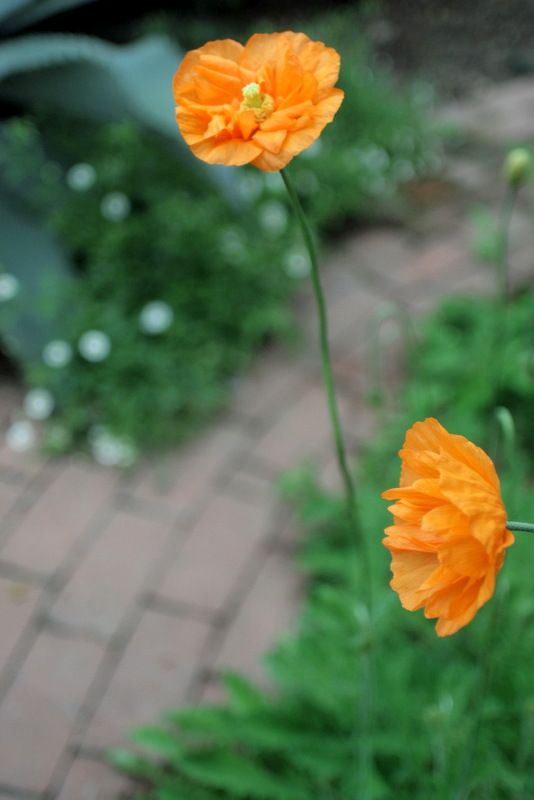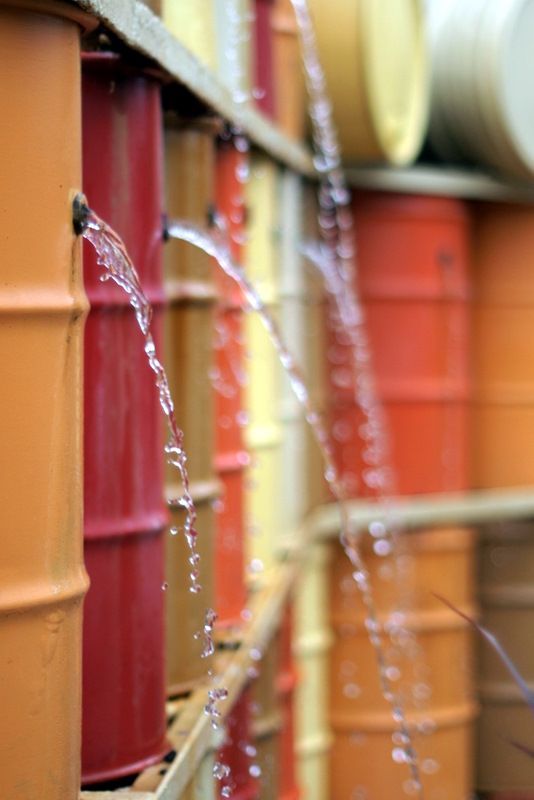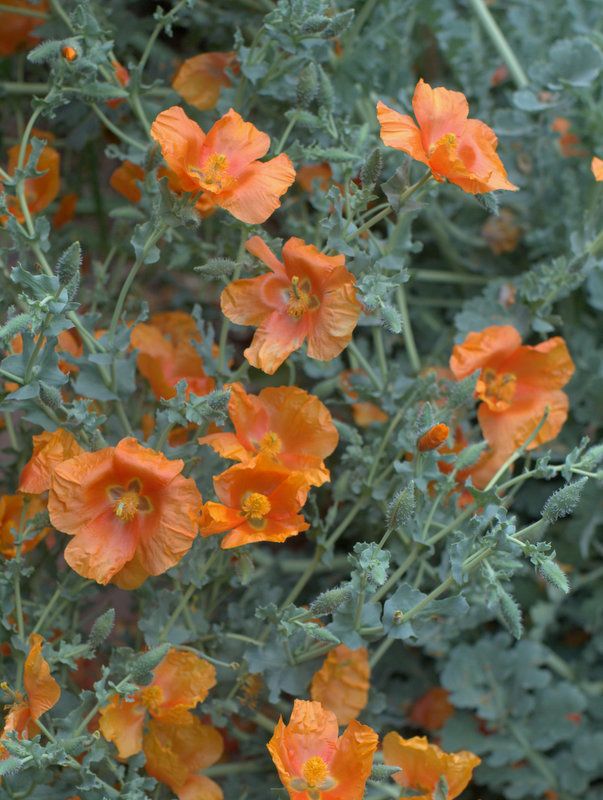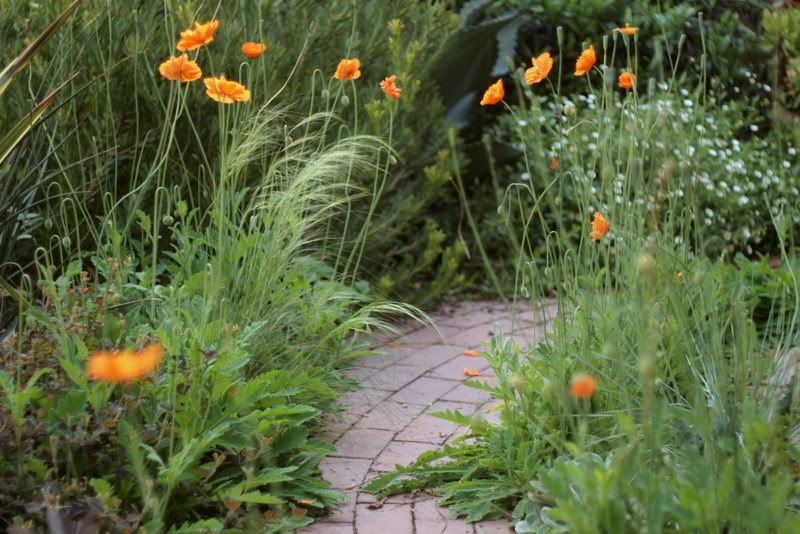

I get it, most local people I talk to are ready for sunnier days. This day has flushed sunny, rainy, and sunny again several times, all before noon. The 90″ of rain that makes this temperate rain forest possible, a treasure that is the largest of its kind in the world, generally is hard on people and industry — but easy on plants. Some plants. It is a huge pleasure to watch suitable plants exult in this unique climate, like subpolar Papaver nudicale. Common Iceland poppies, not an easy thing to grow in SoCal unless you get the narrow winter/spring timing just right, are easy to make happy here, and to my eye are as glorious as any meconopsis.

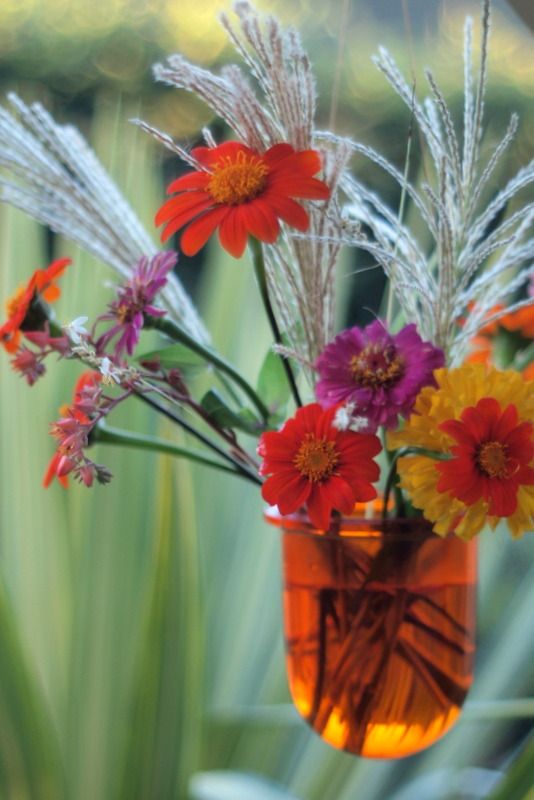
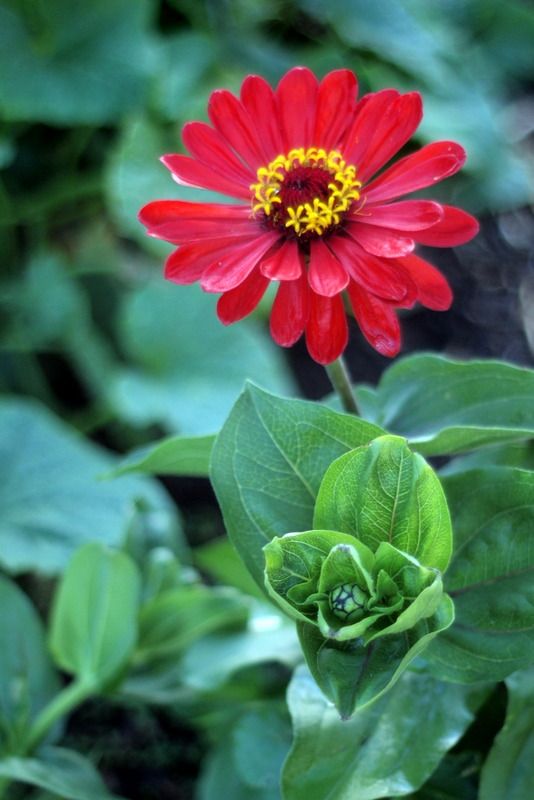
Of course, there are many plants that are tricky if not impossible to make happy with a cool, wet spring and shortish summer growing season. (I’m taking a big chance on zinnias from seed this year.) Tomato plants are filling the big box store shelves, and the lust for attaining a home crop is palpable as shoppers intently peruse varieties among the aisles — that’s an iffy proposition depending on the variety chosen and your microclimate, but to me that’s what the local farmers’ markets are for.

And trial-and-error experiments in planting can result in some beautiful, if potentially short-term winners depending on what winter has up its sleeve any given year. Both Acacia pravissima and Acacia cultriformis made it through this last tough winter. I brought borderline A. cultriformis up north from Los Angeles. Acacia pravissima was bought local and is generally accepted to be one of the hardiest acacias for coastal PNW. If trialing plants is your thing, a wet zone 8-9 affords lots of opportunities. (The War Boy Nux in Fury Road sums up a spirited attitude that can be adapted to making gardens here…or anywhere for that matter: “I live, I die, I live again!“)

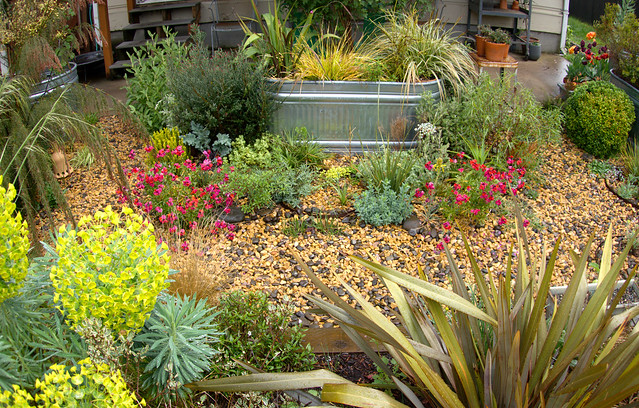
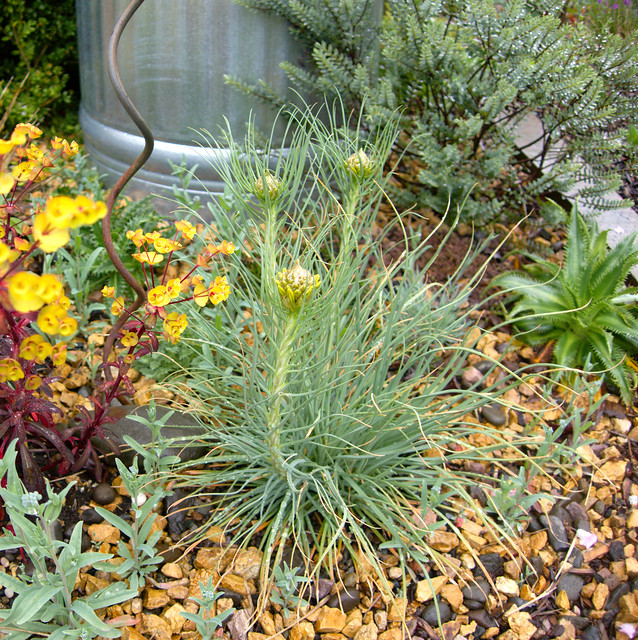
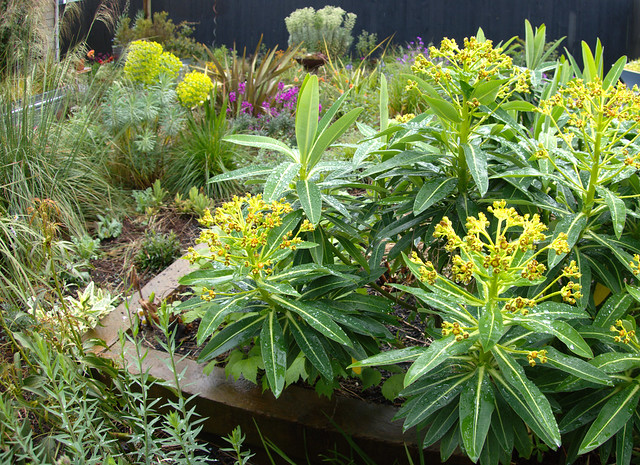
While I love trialing plants that enjoy the wet conditions, plants that prefer the dry side are my weakness (old habits die hard), and many are surprising me by flourishing — the dry, rainless summer improves the odds, but still it’s incredible to think of the amount of water these plants are enduring in winter.


The garden seems to be filling in much faster than previous Mays, as plants like melianthus establish bigger root systems. No-shows this May include veronicastrum, which is a disappointment, but I have some dark castor bean seedlings that need a spot.

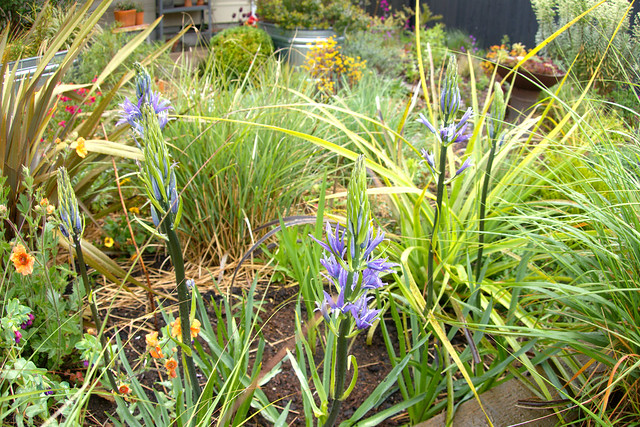
I’ve always been pro-bunch grasses and initially packed the garden with seslerias, miscanthus, deschampsia, anemanthele, calamagrostis among many kinds — and as other plants filled in, many of the grasses have since been thinned or moved to the front garden. The overly vigorous Kaffir Lily was moved out of the back garden entirely and left to settle scores with Spanish bluebells in a narrow strip against the front fence. There’s been lots of plant shuffling going on since February.

I assumed the Sicilian Honey Garlic would be weedy, but that’s not the case at all, disappointedly so — just two clumps bloomed this spring.


Clumps of Digitalis parviflora increased in size while Digitalis ferruginea diminished. However…Digitalis ferruginea seems to be a prolific reseeder. I’ve potted up what I’m assuming are its progeny found at the base of clumps and weeded out lots more. Identifying reseeders here has been a learning curve. In my zone 10 garden the cast of reseeders became easily identifiable over 30 years, but here it’s still a guessing game.

One of the biggest surprises as far as reseeders has been dierama. A plant that once seemed unattainable and ungrowable reseeds here as thick as grass. And its identity is not in doubt, since I collected seeds and sowed them in a tray — with excellent germination results. I needn’t have bothered with collecting seeds in fall with the garden full of seedlings this spring. It still feels a little strange to weed them out…

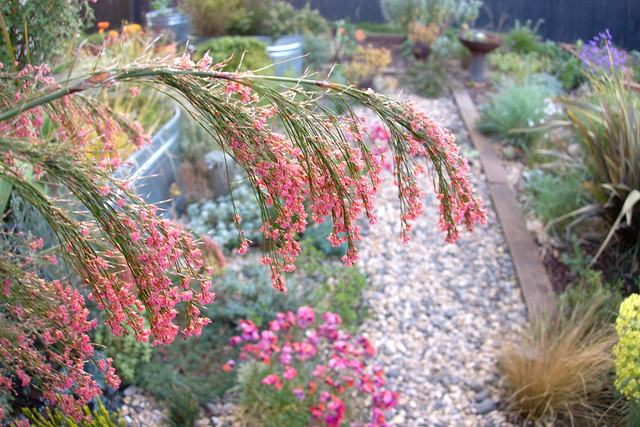
The mother clump of dierama to the right of the box above has already had to be thinned drastically off neighboring plants, so one fast-growing clump is more than enough, and I’ve already got three. In particular, I won’t be sacrificing things like Olearia x mollis ‘Zennorensis’ in the foreground to the expansionary designs of dierama! Nice problem to have, though…