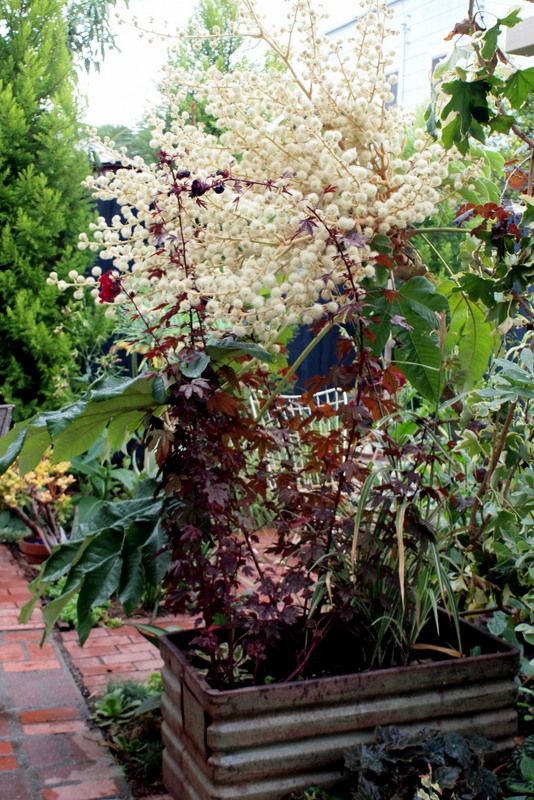
One of the more excruciating projects this past summer involved the tiled patio on the east side of the house, photo taken 10/3/10. The indoor tile left over from a friend’s DIY project was a mistake the day we laid it down almost two decades ago. It was the right price, as in free, but I’ve always hated it. It’s incredibly slippery when wet, which is quite often since I’m always watering the containers here. The fact that it was free blinded me to the obvious distinction in traction between indoor and outdoor tile. Our big Newfoundland Toby used to tear through this space, performing a cartoon-character skid when the tiles were wet, like a goofy Newf on ice skates, madly pumping his paws to regain footing before shooting out the gate.
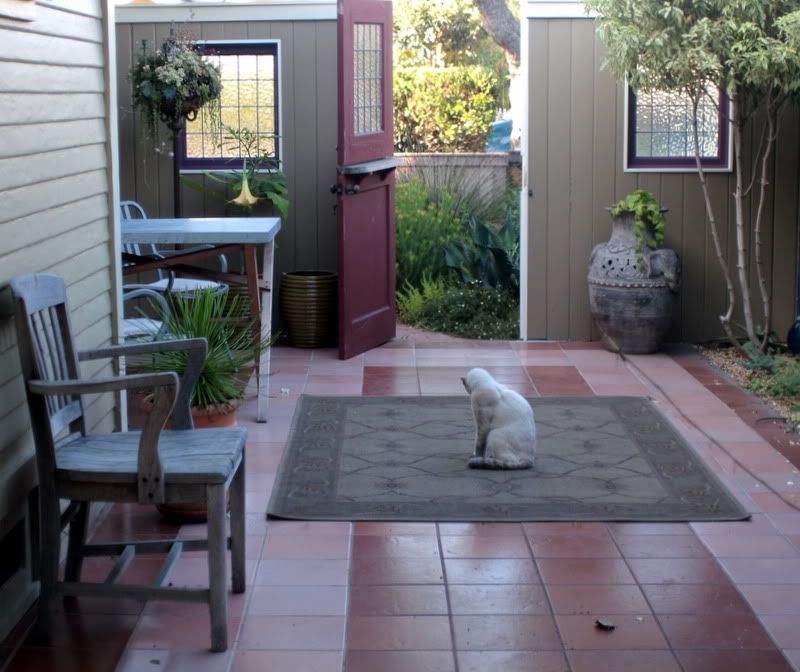
Like a sore tooth, it was a low-grade source of constant annoyance. The solution had to be cheap, of course, and every time I walked through this space I ticked off possible alternatives. Just lay gravel down over it? I actually saw this done on a local garden tour, the entire concrete driveway left in situ but graveled over, a no-sledgehammer method of transforming a utilitarian driveway into crunchy conservatory terrace for potted plants. But I couldn’t just careen from crazy solution to crazier solution all the time.
Then one morning in early summer when I was home alone (6/10/12 to be exact), I grabbed a hammer and chisel, and with no overarching plan knocked off a tile, just to see if I could. And I could. It was surprisingly easy. At that point, I had a tile patio minus one tile, which is no longer an intact patio but basically a demo in progress. So I kept at it, in secret, until every tile was removed. Amazingly, no one came around to the east patio until it was half finished, at which point it became a fait accompli. Some tips on how to get motivated for onerous, back-breaking tasks: Read a particularly incendiary article on a topic sure to push your buttons, grab the hammer and chisel, and have at it. (Good thing it was an election year.) Swing wide, swing hard, substitute issues for tiles, and shatter them into tiny pieces. Wear protective safety glasses.
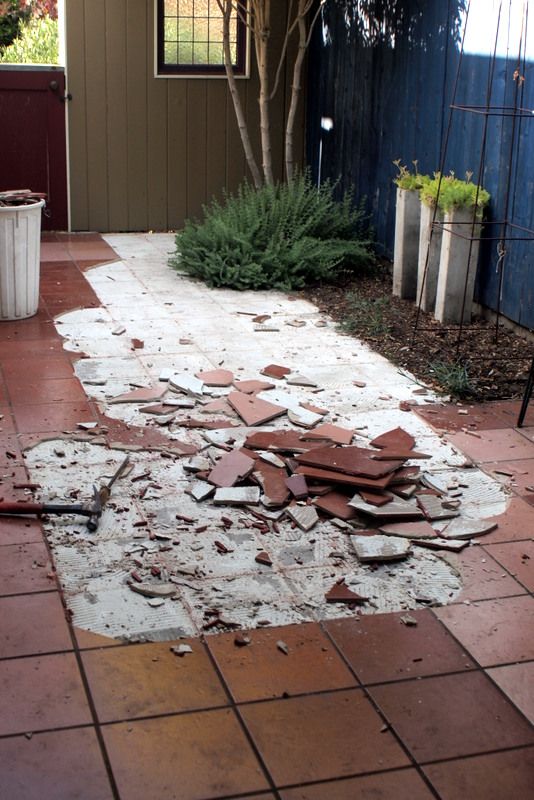
And for a brief, bare moment there was triumph. Triumph replaced fairly quickly by dismay. Because, you see, removing tile is actually the easy part. It doesn’t feel like the easy part at the time, oh no, but the real
sturm und drang is still to come. And that’s when you realize that it’s the mastic/glue/thinset stuff
underneath the tile that’s the real enemy. I was pretty handy with the chisel, so I assumed it was a simple matter of patiently, laboriously scraping it off, but it didn’t “pop” off like the tile did. In fact, it didn’t budge at all, so I did some research. Yes,
now, not before I started. It was a shock, to put it mildly, to find there were No Easy Answers. Internet research revealed nothing but desperate people who had stumbled into this same quagmire, all looking for some way out, with the list of what couldn’t be done growing the more I researched it. For flooring, you can’t add new tile or stone until the old mastic is removed. In fact, you really can’t do much of anything except stare dumbstruck at the great, unholy mess you’ve created.
The mastic remained until mid August, when in desperation we attacked it with a rented floor resurfacing machine, a monster that leaped and bucked like a crazed bronco, at one point throwing Marty and slamming him into the side of the house. The diamond blades created a head-splitting noise and produced dust clouds that reached white-out conditions. (And all that long day Marty never once said, “What the hell were you thinking?”)
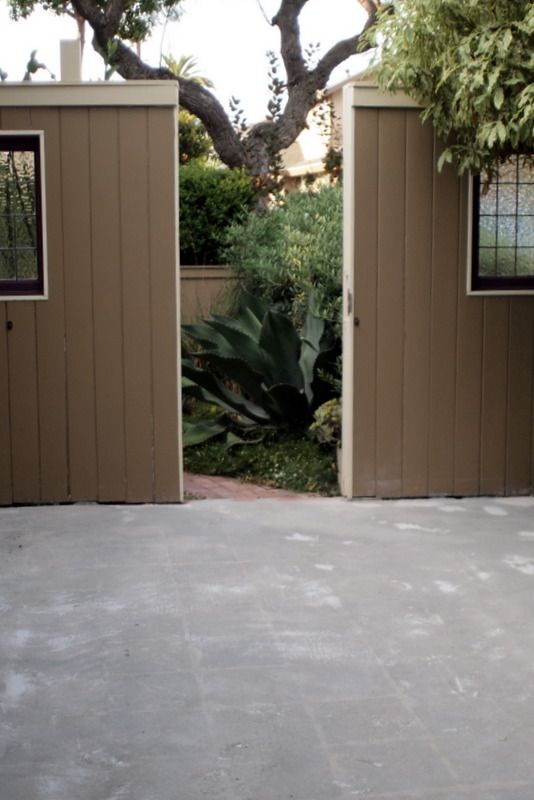
After a miserable day of dust masks, hearing protection, enduring August temperatures in Dust Bowl conditions, we were left with this — almost all traces of the mastic removed.
Now what? Besides the expense, adding anything on top would screw with the grading. And after that ordeal, staining the concrete seemed like a walk in the park. I briefly checked out estimates with professionals, but opted for DIY once again, and a week later we purchased a cheap concrete stain set from a big box store, about $80. The process included four distinct steps, including a light acid wash to clean the surface, the main color, highlights, then a sealer. My biggest concern was for nearby plants getting residue washed into their soil, because a lot of water is used in the process, but all plants survived the stain application fine.
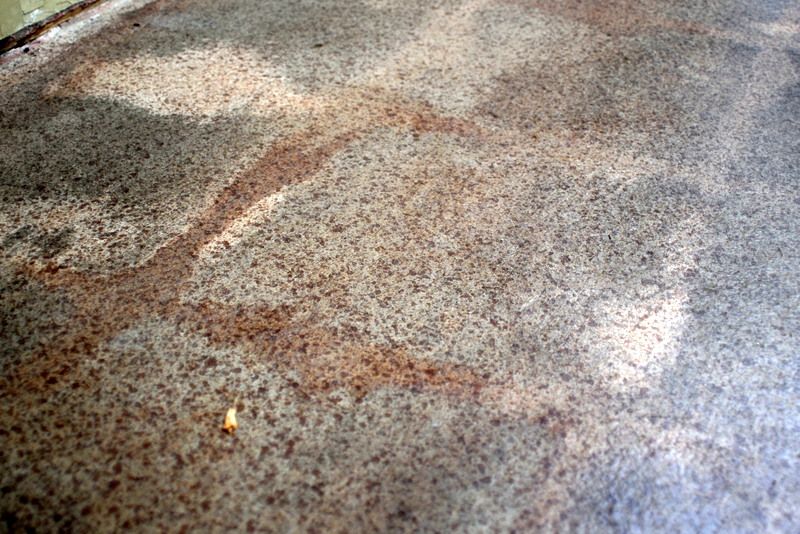
The sprayer had gummed up by the time the highlights were applied, even after carefully cleaning the equipment, which ultimately gave a stippled, paint-spattered effect instead of more even coverage, and the grid from the tile ghosted through. But by this point, we were so thrilled to have survived the ordeal that any result would have been deemed acceptable.
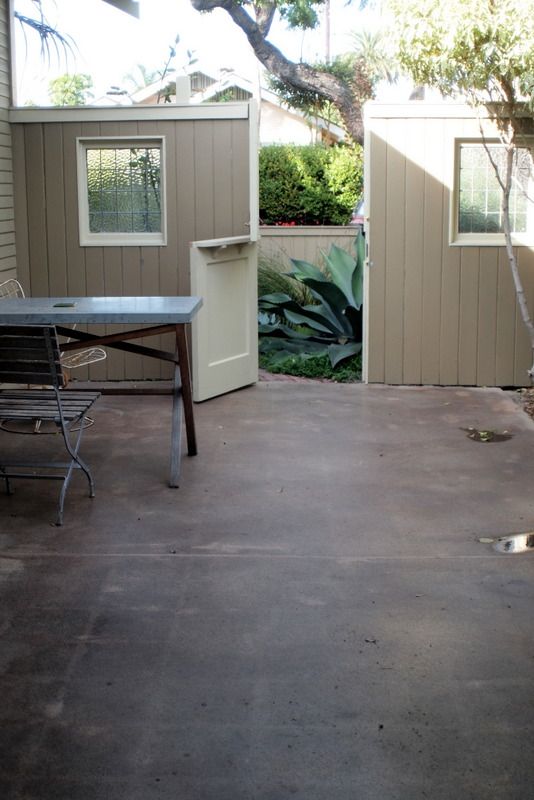
Photo taken 11/1/12 of the stained (non-slippery) concrete.
Seems like every DIY project has its unexpected twists and turns, setbacks, painful lessons, and this one seemed to have more than most. (Sample painful lesson: some things, like flooring tile and wall paper, are
forever.) What started way back with poor planning, by using the wrong material, ended up, after more poor planning, surprisingly OK. And with Christmas not far off, who knows? There might possibly be some new outdoor furniture under the tree.