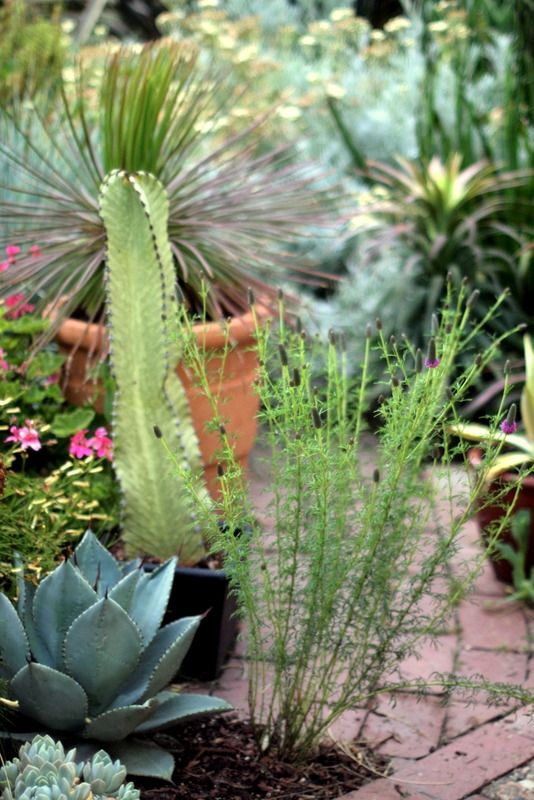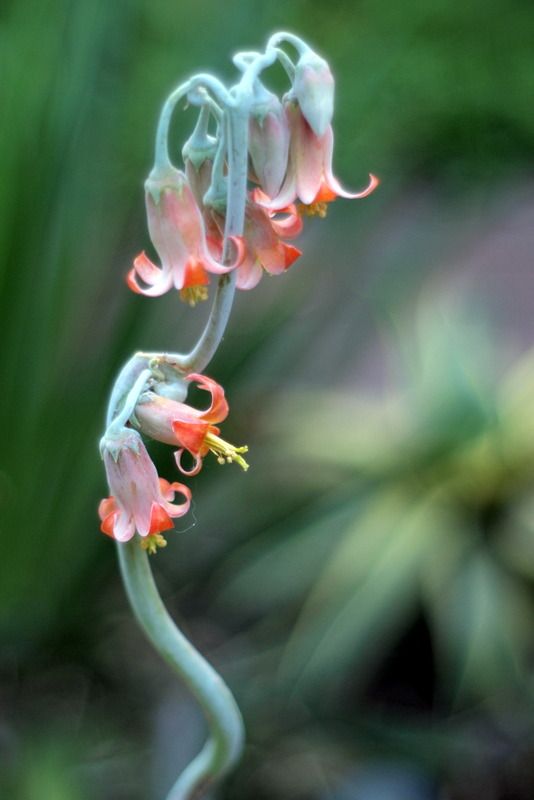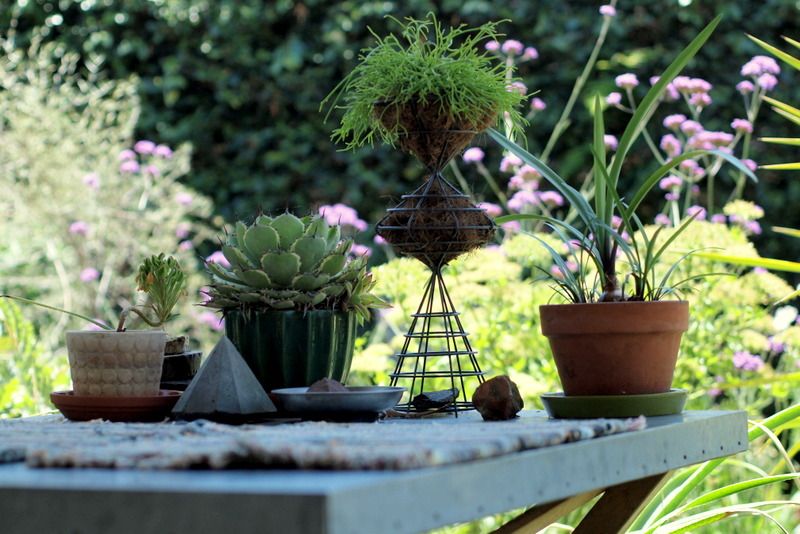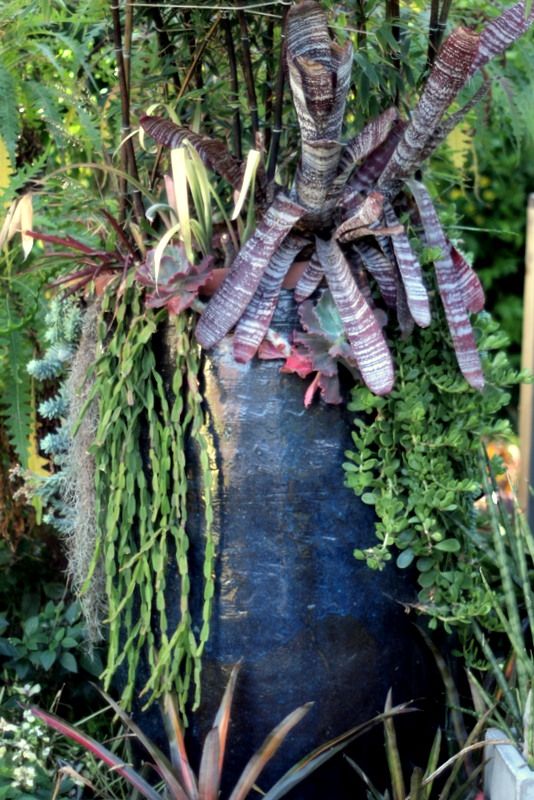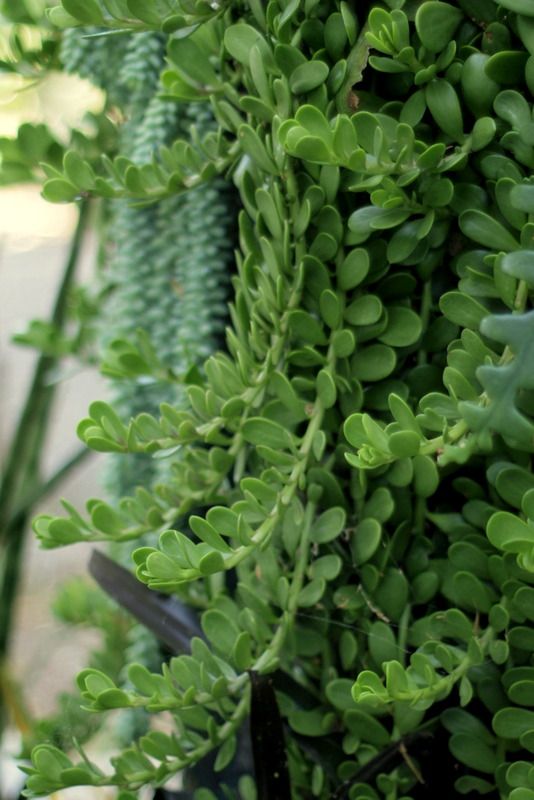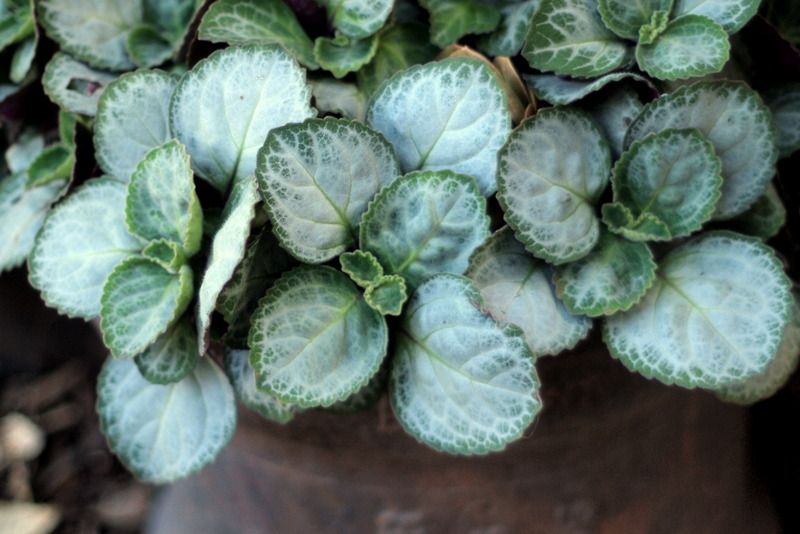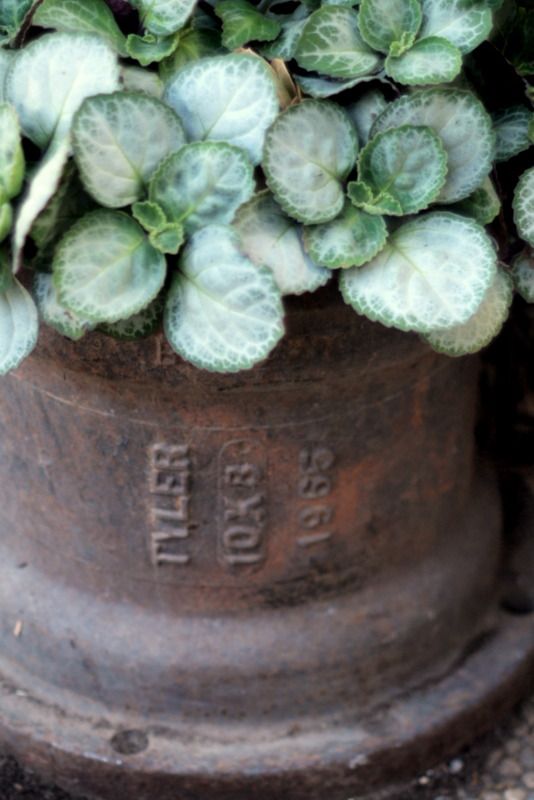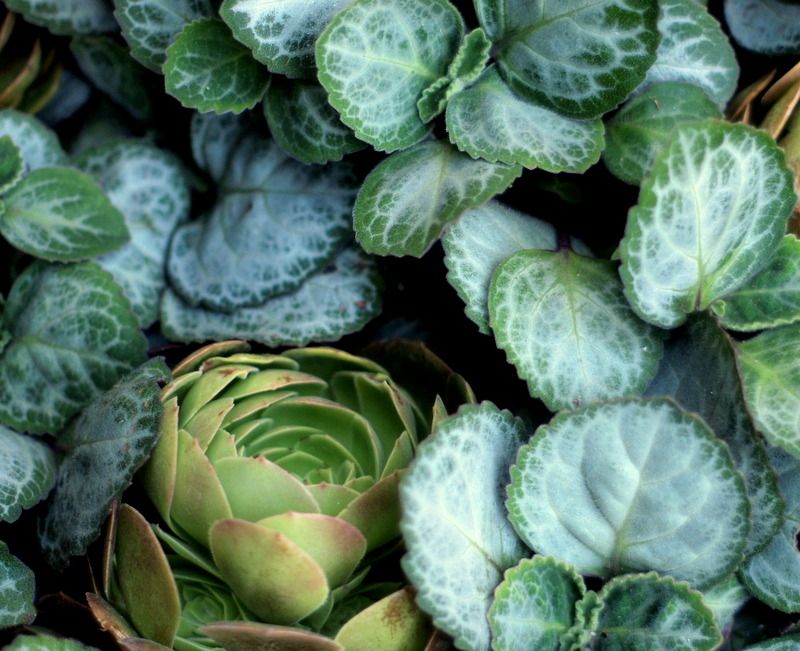
a succulent table (filed under fun but useless things)

If I wake up to a day that has a few extra hours rattling around like loose change in the pockets of Marty’s jeans that I always borrow, clinking against paper clips and last night’s Peroni bottle cap, it’s pretty much guaranteed I’ll make something, not all of which ends up on the blog. Case in point, as Mr. Serling said. There’s this old, topless coffee table base I’ve kept around for just such a day with a few spare hours, which happened to be sometime last summer. Maybe I’d make a new tabletop out of mosaiced bits of salvaged wood lying around. An idea which, big surprise, turned out to involve a basic knowledge of carpentry that I don’t currently possess.

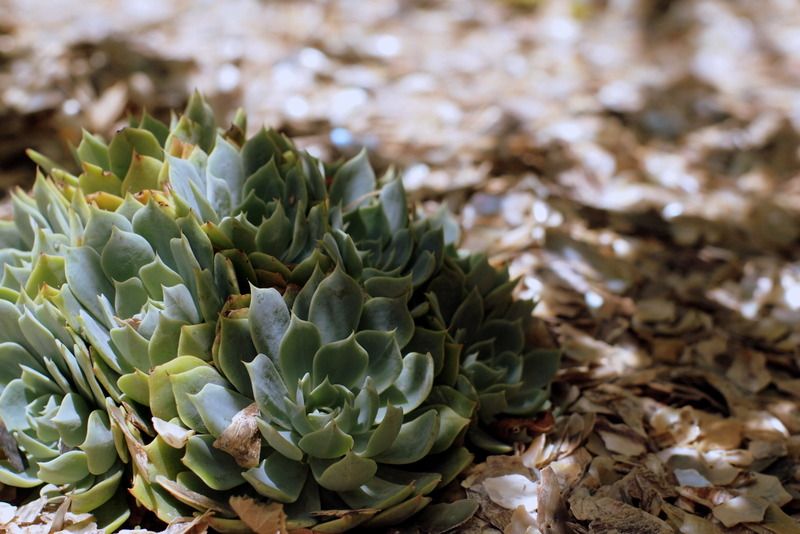
But look, there’s all these succulents that need thinning! You can see where this is headed, in the direction of the craft of least resistance: Succulent table!

 photo P1013256.jpg

Completed in a couple hours, it immediately turned from triumph into garden albatross, taking up all the room of a coffee table with zero functionality. In my zeal to make use of excess succulent cuttings, I neglected to build into it a flat surface, even if only large enough for a cup of coffee. Or a Peroni.

 photo P1015294.jpg

At the end of some ill-fated projects, there’s that weird sensation, a mixture of both accomplishment and dread. This was one of those projects.

 photo P1015296.jpg

But the succulents were thriving in the shallow, free-draining root run, a hammock of hardware cloth mossed to hold soil, so I continued to care for it, cursing freely when my knees banged into the table, as they often did. With summer approaching, and chairs and tables getting shuffled, I really wanted it out of the way, preferably in a spot shielded from full sun to reduce watering needs. And if there wasn’t a suitable spot, it was time for the albatross to go.

 photo P1015289.jpg

Looking around this tiny garden for a scrap of space I’ve somehow overlooked, as I’ve done a zillion times before, I settled on a gap between the Monterey cypresses against the eastern fence. Not wanting to crowd these important privacy screens, I’d left the ground mostly bare among the three. The table tucked in snugly between two, and the albatross was, at last, no longer underfoot. In fact, the albatross loved its new protected location so much that the succulents plumped up and spilled over the sides, hiding the armature of hardware cloth. And for the first time it didn’t seem quite so silly after all.

 photo P1015324.jpg

Tucked in against the fence, even this week’s hot and fiercely dry Santa Ana winds couldn’t touch it. Now, instead of a failed table, it’s an abstract band of mostly bright Aeonium ‘Kiwi’ floating about 3 feet above ground level, lighting up the gloom at the base of the cypresses.

 photo P1015331.jpg

(Here’s a closeup of the fasciation on that bloom of Euphorbia lambii you probably noticed.)

 photo P1015335.jpg

Once the cypresses and a couple shrubs mature/survive, the albatross will have to be relocated, but it can stay through summer.
Just forward of the cypresses, the shrubs are dark-leaved Ceanothus ‘Tuxedo’ in the foreground and Leucospermum ‘Sunrise’ in the distance.

 photo P1015341.jpg

 photo P1015346.jpg photo P1015339.jpg

 photo P1015315.jpg photo P1015319.jpg

Now the succulent table experiment has me thinking in new directions. After visiting the Moorten Botanical Garden, building raised benches for succulents and cacti has become an intriguing possibility I’ve been keeping open for an underused side patio, something I can practice on with those basic carpentry skills I hope to acquire.

Posted in garden ornament, succulents | Tagged , , , , , , , , , | 4 Comments

isoplexis and digiplexis side by side

There’s no telling which of these, if either, will be around for photos next year, so now’s the time for a side-by-side color comparison.
According to this article, it was Isoplexis canariensis that was crossed with Digitalis purpurea to give us Digiplexis ‘Illumination Flame.’ The bottom photo is of Isoplexis isabelliana, but the color if not the flower shape is a good semblance of I. canariensis, with probably less gold and more burnt orange. (Being ever on the lookout for the tall, spiky, and orange, I’ve trialed a few isoplexis. I. canariensis was short-lived in my garden.)  The shocking pink, apricot-throated digiplexis to my eye exudes a Jonathan Adler-inspired play with colors. In its new guise, dear old digitalis has been liberated from the genteel confines of the shady cottage garden. Even though able to handle full sun, especially near the coast, the unseasonal 20-degree jump into the 90s today and for the rest of the week is not to either plant’s liking, or mine for that matter. I’ve had verbascums collapse under similar conditions. They both held up surprisingly well this first day of the heat wave. Some lateral spikes broke off a few days ago but were saved for a vase.

 photo P1014814.jpg

Digiplexis ‘Illumination Flame’

 photo P1014813.jpg

Isoplexis isabelliana

 photo P1015191.jpg photo P1015182.jpg

If it lives up to its sturdy reputation, I wouldn’t be surprised if digiplexis has a future as a florist’s pet.


Posted in cut flowers, Plant Portraits | Tagged , , , | 10 Comments

this is my brain on spring

Spring is such a massive distraction, and that’s coming from just my own little garden, which apart from work* I rarely want to leave. For the first time in my adult life, I drove by a multiplex theater on Sunday and wasn’t familiar with a single movie title on the marquee. I can’t keep plant show dates straight and nearly missed attending the Spring Garden Show over the weekend, which always has great vendors like B&D Lilies and Franchi Seeds of Italy, though if they were at the show this year, I didn’t find them. I had no idea there were speakers or who they would be (Dan Hinkley). Spring, I give up. You win. I know by summer the infatuation will have cooled.

At the show I speed-walked past the display gardens and headed straight for the plant vendors. My overall impression was that a neo-19th century orchid mania has gripped this show. But since these plants are born scene-stealers, it’s hard to tell if the show has a creeping orchid bias or not. High-dollar orchids bobbed out of shopping bags, rode up and down escalators in the arms of their new, terribly excited owners. Masses of orchids in exquisitely perfect bloom added a concentrated and disorienting “In The Realm of The Senses” mood to the show.

 photo P1015103.jpg

 photo P1015102.jpg

 photo P1015115.jpg

 photo P1015097.jpg

Every color of epiphyllum, the orchid cactus, was on offer.

 photo P1015111.jpg

 photo P1015120.jpg

Every color of epidendrum, the reed orchids

 photo P1015095.jpg

The techno-hobbyists also had plenty to admire, like a bonsai’d boug

 photo P1015158.jpg

As usual, the bromeliads were my biggest temptation. I’ve really wanted an alcantarea, but this lovely thing had just won some award and so carried a trophy price.

 photo P1015126.jpg

One of my favorite vendors at the show carried exotic bulbs and gorgeous tropical seed pods, like this entada species.

 photo P1015141.jpg

 photo P1015132.jpg

Cerbera odollam, the Pong-pong tree, also know as the “Suicide Tree,” once used in Madagascar in the ritual “trial by ordeal” to prove guilt or innocence.
Justice was irrelevant because, guilty or innocent, the tree is invariably lethal (related to the oleander).

 photo P1015172.jpg

The succulent tables are always worth a browse.

 photo P1015171.jpg

 photo P1015166.jpg

I wrote about this succulent not long ago, Graptopetalum superbum. This one has slight variegation to the leaf and has been named ‘Cotton Candy.’ $50 for a one-rosette plant.

 photo P1015125.jpg

I spent a lot of time with the tillandsias and hanging plants, trussed with fishing line, performing delicate aerial ballets.

 photo P1015149.jpg

 photo P1015144.jpg

 photo P1015152.jpg

 photo P1015150.jpg

What did I buy? More rhipsalis, of course, that shaggy, mop-headed epiphytic cacti. Andy’s Orchids had a nice selection.

 photo P1015255.jpg photo P1015240.jpg

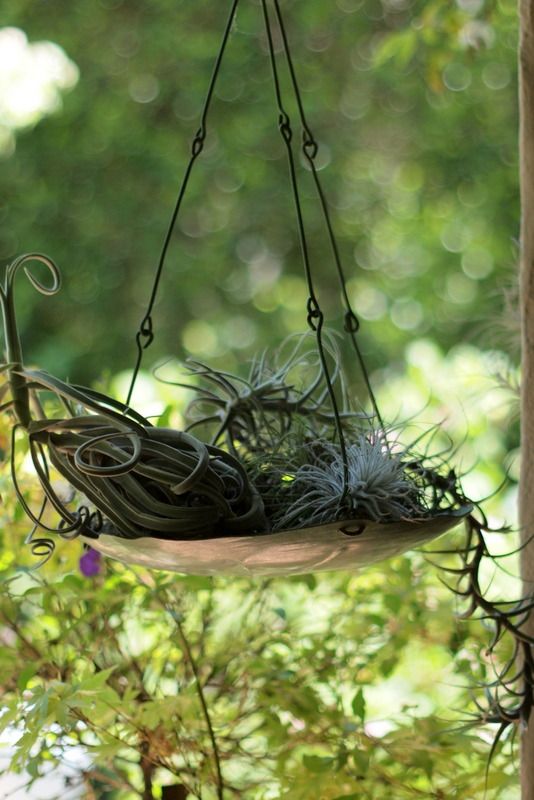
And being on a hanging plant binge, you know there was some experimenting yesterday on some old topiary forms.

 photo P1015270.jpg

After the show I had a craving for simplicity and found these ‘Yellow Garden’ cosmos at a local nursery.

 photo P1015266.jpg

I don’t know how those orchid people stand the excitement.

*In this video ‘Verbatim: What Is a Photocopier?’ the NYT recreated a scene from my day job. My stand-in is the woman at the end of the table with the shocked expression, writing it all down. Which partly explains why I like plants so much…

Posted in garden travel, plant nurseries, succulents | Tagged , , , , , , , , , , , , | 7 Comments

waxflowers in bloom at Grand Park

 photo P1015039.jpg

The last time I worked at the downtown Los Angeles courthouse prompted this post on Grand Park*.
Yesterday the waxflowers were in bloom, an Australian shrub that most likely passed completely unnoticed at my last visit.
The waxflower, or chamelaucium, is a member of the myrtle family. Its tiny, needle-like, evergreen leaves are arguably past the point of subtlety, but wonderfully adapted to sun and drought.
From a distance, for a moment the foamy mass had me guessing Baja spurge, Euphorbia xanti.

 photo P1015041.jpg

Branches of the waxflower are familiar to everyone as a perfunctory addition to mixed bunches from grocery stores.
But they are not seen in gardens much anymore. A single shrub is possibly a bit too precious.

 photo P1015036.jpg

Massed in the landscape they are wild things again, as good with concrete as they are with a vase.


*August 30-31, 2014, 50,000 Made in America Festival attendees will sprawl across Grand Park. Watch out for the plants, people.

Posted in cut flowers, garden visit, Plant Portraits | Tagged , , , , | 3 Comments

sweet peas and orlaya

 photo P1015003.jpg

Finally made it to the garden plot, where mountains of old chard running to seed were thrown on the compost pile, aged horse manure was dug in, and all was raked and watered.
After two weeks of pure neglect, I was surprised to find any sweet peas to cut. Silver leaves are prunings from the Acacia podalyrifolia.


Posted in cut flowers | Tagged , , | Leave a comment

planting notes 2014

Every year brings a new crop of preoccupations in the garden, such as: Will the beschorneria choose this spring for their first bloom? How about the puya in the gravel garden? Feel like blooming this year? Some plants really do take their sweet time. Judging by my own temperament, I’d say garden makers have a unique blend of philosophical stoicism that co-exists uneasily with a raging, barely controlled impatience.

 photo P1014851.jpg

At Annie’s Annuals & Perennials/AAP over the weekend, impatience had the upper hand. I splurged on Puya mirabilis, a smaller puya reputed to be the one for blooming at a young age. I don’t remember which one I planted in the gravel garden and won’t know until it blooms, which may be eons away still.

 photo P1014779.jpg

Still waiting for blooms on this beschorneria, and I’m pretty sure we can write off 2014. AAP’s display gardens had enormous, towering bloom trusses that had to be tied to the fence for support.

 photo P1014775.jpg

I’ve been trying to establish asphodels for some time and finally have a few clumps with potential. This morning I noticed a bloom snout in one of the clumps, which is almost unbearably exciting. I think too often I subject potentially tough plants to overly harsh conditions initially, when what they need is some babying for a good start. And I’m trying to remember to mulch like crazy, which is easy this year since there’s piles of it. These are Asphodeline lutea (syn. Asphodelus luteus). Enormous clumps were in bloom in AAP’s display beds. I knew they were tall plants in bloom but wasn’t sure about their width, so seeing them at Annie’s helped fill in the blanks on the eventual size of this ‘Jacob’s Rod.’ A medium-sized phormium is a good visual reference for girth. A white asphodel, Asphodelus albus, was also in bloom, and though I’ve always wanted the yellow I have to say the white is probably even more stunning. (No time for photos at AAP since it was the last stop before heading back down to Los Angeles.)

 photo P1014786.jpg

Lessertia montana made the cut for the ride home.

 photo P1014763.jpg

As did a couple Glaucium grandiflorum. I pulled out some of the annual poppies to find a home for these.

 photo P1014764-001.jpg

Useful for protecting small plants and young seedlings from digging cats. And to remind my itchy digging fingers that this spot is already taken.

 photo P1014760.jpg

A couple self-sown sideritis turned up this spring, which I greedily potted up at first sight and just planted back into the garden yesterday. Looking at AAP’s extensive offering of sideritis, I think it’s S. oroteneriffae.

 photo P1014878.jpg

One sunny spot happened to be available near Leucadendron ‘Ebony,’ but I’d be a fool to let the sideritis crowd the young conebush, so the sideritis may have to be moved.

 photo P1014761.jpg

I also saw mature plants of this native thistle, Cirsium occidentale, at AAP’s last weekend. The mother plant was very short-lived in my garden, so I was surprised to find a seedling early this spring. Knock wood, this one produces a few more seedlings. (5/9/14 edited to add that this thistle died in the recent heat wave.)

 photo P1014830.jpg

Crambe maritima, hopefully a future depositor in my garden’s seed bank. Maintaining a choice and interesting crew of potential self-sowers is my favorite kind of garden making at the moment. They bring elements of surprise, serendipity, adaptability, fitting in with rainfall patterns. And let’s be honest, getting beautiful things for free never loses its appeal.

 photo P1014823.jpg

One of the surprise benefits of keeping pots near the garden proper is that occasionally plants will self-seed into the softer potting soil. In early spring I found several seedlings of nearby Eryngium padanifolium in this container of alonsoa but nowhere else in the garden. I noticed yesterday ballota had done the same thing in the container of Albizia ‘Summer Chocolate.’ I never find ballota seedlings in the garden.

 photo P1014864.jpg

Only one plant of Castor Bean ‘New Zealand Purple’ was overwintered, so there’s very few volunteers this year.

 photo P1014795.jpg

The dry-loving kangaroo paws will rule summer. A favorite for massed plantings, I like them dotted throughout the garden for their incredibly long-lasting vertical lines. The hybrids grown for compact growth don’t have the same appeal to me.

 photo P1014837.jpg

This chartreuse kangaroo paw’s flowers are not as flamboyant as the ‘Yellow Gem’ above, but as with all things chartreuse, they complement everything.

 photo P1014872.jpg

Cistus ‘Snow Fire’ is a smallish-growing shrub planted last fall that hasn’t made me wait long for blooms.

 photo P1014801.jpg

I’m envious of gardens with separate growing beds to trial plants and grow some on to a bigger size, like this Aloe marlothii x castanea hybrid, which is temporarily tucked in near the base of the ‘Yellow Gem’ kangaroo paws. But along with the endless lessons in patience the garden doles out, working with what you’ve got is another of its favorite recurring themes.

Posted in clippings, garden travel, journal, plant nurseries, succulents | Tagged , , , , , , , , , , , , , , , | 5 Comments

rhipsalis in the Bay Area

I was up in the Bay Area for two days, helping to launch a vegetable garden, which was just enough time to squeeze in a couple brief plant shopping forays at Flora Grubb Gardens and Annie’s Annuals & Perennials. At both nurseries I found rhipsalis, that filmy epiphytic cactus that was born to spill from hanging pots under my shady pergola. Unknowingly, I bought Rhipsalis burchellii from both nurseries, which is fine with me since rhipsalis has been generally not easy to find.


Rhipsalis burchelli photo P1014712.jpg

Rhipsalis burchellii

 photo P1014729.jpg

Both burchelliis were planted into this low bowl to bulk up to a substantial, hangable size.

 photo P1014727.jpg

Flora Grubb’s also had a rhipsalis with a slightly chunkier leaf, Rhipsalis sulcata, bottom rung on the left.
Top rung, on the right, Colocasia esculenta ‘Lime Fizzy’ was found at Flora Grubb’s. Stumbling on desirable plants in small, inexpensive sizes is my kind of plant lottery.
Bottom rung, on the right, Sedum x adolphii ‘Golden Sedum’ was from Annie’s. There was an aureate, pulsating glow emanating from the table holding pots of this succulent.
Another lime-green/gold succulent, top rung on the left, Sedum treleasi, was also found at Annie’s, and about a half dozen other things I’ve been planting all morning.
More soon on them, but just wanted to give a head’s up on the rhipsalis.

(get ’em while they’re hot)


Posted in plant nurseries, pots and containers, succulents | Tagged , , , , , , | 4 Comments

Bloom Day April 2014

 photo P1014701.jpg

A day late for the Bloom Day report, with the above photo of the back garden taken this overcast morning and most of the closeups taken the past couple days. It’s all shockingly rumpled and disheveled already, but I still love waking up to it every morning. I’ll use this photo as a point of reference. Verbena bonariensis is already pushing 6 feet, almost as tall as the tetrapanax. The poppies were the first to bloom, followed this month by the self-sowing umbellifer Orlaya grandiflora, the little pops of white. All this blowsy madness will be over too soon, by May probably, and then we’ll be tidy and respectable again, refreshed and ready to dig in for a long, hot and very dry summer. Deep blue on the left is the fernleaf lavender Lavandula multifida, which will be a mainstay throughout summer. There’s about six clumps of this lavender throughout the back garden. (A couple days ago I bumped into an old 2012 article in The Telegraph in which designer Tom Stuart-Smith uses the words “exotic meadow” to describe some planting ideas he’s playing with, and those two words pretty much sum up the back garden this spring.)

 photo P1014693.jpg

To the left of the tall verbena, the monocarpic umbellifer Melanoselinum decipiens is in bloom. Since it’s supposed to make great size first, I’m guessing this is a hurried, premature bloom, hastened possibly by conditions not expressly to its liking. Maybe it’s been too warm already.

 photo P1014626.jpg

Scrolling back up to the first photo for reference, the orange spears in the background on the right are Digiplexis ‘Illumination Flame’

 photo P1014611.jpg

And furthest right, nearest the arundo, the Kniphofia thompsonii I moved from the front gravel garden last fall. An aloe that actually prefers nicer, cushier digs than the gravel garden. I finally noticed all those suckering green shoots on the potted Albizia ‘Summer Chocolate’ and removed them yesterday.

 photo P1014614.jpg

Also in this area, near Stipa gigantea, Salvia curviflora has started to bloom, with more photobombing poppies.

 photo P1014616.jpg

The salvia is surrounded by the leaves of summer-blooming Agastache ‘Blue Blazes’

 photo P1014570.jpg

The little 4-inch pot of Olearia virgata v. lineata ‘Dartonii’ I brought back from Far Reaches Farm is turning into a graceful shrub. (Under the wire basket I’m protecting some newly planted corms of the Gladiolus papilio hybrid ‘Ruby,’ tall and graceful as a dierama. There’s no current U.S. source, but Sue Mann of Priory Plants very kindly and graciously sent me a few corms.)
Towering Euphorbia lambii is in bloom in the background.

 photo P1014605.jpg

This plectranthus is doing a great job as a stump-smotherer. The stump of the smoke tree ‘Grace’ was still sending out shoots last year, not so much anymore.

 photo P1014607.jpg

Second (or third?) year in the garden for the Baltic parsley, Cenolophium denudatum, so it’s quite tough as well as graceful. I think the seed came from Derry Watkins. Who knew umbels could have such variation in color: the orlaya is the whitest umbel, the melanoselinum a pale pink, the Baltic parsley more green than white.

 photo P1014576.jpg

Last year the pergola had draped canvas for shade, and this year Marty rigged up something more permanent. It’s shady all day, except for late afternoon, when the sun slants in from the west, and is my favorite spot for viewing all the aerial pollinator activity on the garden. I’ve been pulling most of the poppies from this area that was reworked last fall, which is now mostly grasses, calamint, phlomis, the Cistus ‘Snow Fire,’ isoplexis. A big clump of kangaroo paws is just coming into bloom out of frame to the left.

 photo P1014591.jpg

I doubt if the isoplexis lasts long in this strong western exposure. Everything else will be fine.

 photo P1014590.jpg

Salvia pulchella x involucrata blooming into Senecio viravira

 photo P1014602.jpg

The irises again, with the big leaves of the clary sage just behind.

 photo P1014603.jpg

The little annual Linaria reticulata just happened to self-sow near the dark iris and the Coprosma ‘Plum Hussy.’ You just can’t make this stuff up.

 photo P1014571.jpg

Closer to the house, looking down through the pergola, with the shrubby Prostanthera ovalifolia ‘Variegata’ in the foreground.
The mint bushes are notoriously short-lived, and I’ve already got a replacement in mind, the smallish mallee Eucalyptus ‘Moon Lagoon’ I brought back from Jo O’Connell’s Australian Native Plants Nursery.

 photo P1014624.jpg

Flash of pink at the far end of the pergola comes from a stand of pelargoniums, including this P. caffrum X ‘Diana’ from Robin Parer’s nursery Geraniaceae.

And that’s what April looks like in my tiny corner of Long Beach, California. More Bloom Day reports are collected by Carol at May Dreams Gardens.

I’ve frontloaded my tumblr (under “Follow“) with lots of old photos and have been adding new ones too.

Posted in Bloom Day, journal, plant nurseries, Plant Portraits | Tagged , , , , , , , , , , , , , , , , , , , , , , , , , , | 3 Comments

Iris a l’Orange

With certain heavily hybridized plants that people have been tinkering with for centuries, like irises, dahlias, and tulips, for instance, you only have to say Let there be orange, click the keys or fill in the catalogue order with your pen, and then forget all about it until orange erupts like Vesuvius in the garden in spring. (Iris was named for the Greek word for “rainbow.”)


 photo P1014460.jpg

 photo P1014481.jpg

 photo P1014493.jpg

Which is apparently what I did when I ordered bearded iris last fall, probably sometime around Halloween, judging by the colors. I skipped tulips this year but ordered a few bearded iris even though their bloom period amounts to a very brief if ostentatious flyby. Dahlias bloom all summer but need as much water as farm animals. Bearded iris can take the hottest and driest of conditions, which is what I’ve got in spades. Their one big drawback is how fast they multiply, needing to be divided constantly for best bloom. The only time I ever worked on my horticultural certificate for a private party was splitting up enormous clumps of bearded iris for an elderly lady. Or maybe it was elderly iris for a bearded lady? Whatever the case, it was my last job in the field, other than installing plants in offices. And I’d rather work for the bearded lady than do that again.

 photo P1014440.jpg

The other half of the order purchased under the influence of a Halloween moon, very black in bud.

 photo P1014477.jpg

Maturing to a deep cabernet.

(Happy, joyous, boisterous Friday to us all.)


Posted in Plant Portraits | Tagged , | 8 Comments

favorites 4/10/14

 photo P1014499.jpg

Loree at Danger Garden shares her favorite plants in the garden every week, and spring is a good time to join in, when so much is fleeting and the turnover in favorites comes at a rapid pace.
True, that’s not the case with Stipa gigantea, a clumping grass from Spain which will grace a garden from spring until late fall.

 photo P1014503.jpg< photo P1014501.jpg

But it is the case with ephemerals like the South African bulb Albuca maxima (also goes by Albuca canadensis) which will go dormant after flowering, when it needs to be kept dry. For this reason, it thrives in the gravel garden amongst agaves and dasylirions, where it reliably pushes up its elegant 5-foot blooms amongst all those jagged leaves every spring. (The beast directly behind this beauty is the Agave ‘Jaws.’) The blooms do last surprisingly long, and it does seem to be self-sowing too. More would be nice to cut for vases, since I hate to rob the garden of those swaying, statuesque flowers that remind me of a snowdrop crossed with a fritillary.
For zones 8 to 11.


Posted in agaves, woody lilies, Bulbs, Plant Portraits | Tagged , , , , | 4 Comments