Free is Worth Your Time

Bloggers need no convincing on this point. And I’m not opening up a can of worms regarding, for example, whether or not to pay for online music or journalism. Obviously, we have to. I’m probably one of the few people in the nation who can claim to have ponied up $50 for subscription to the online New York Times Select during its experimental and brief existence just so I could read Paul Krugman’s columns when they were behind the Select firewall. This is a purely noncontroversial free, in the context of outdoor summer concerts, something everyone can get on board with.
So even though it’s high summer, I urge you to leave your horticultural symphony for just an evening, to lay down the garden baton and head for some outdoor concerts. If you’re in Los Angeles, the premiere outdoor concert venue is Grand Performances in Downtown Los Angeles. This is not pop standards at your local park, though there’s nothing wrong with that, but some of the most exciting music and performing artists the world has to offer. And it’s free. Take the Metro Blue Line to the Metro Station at 7th and Flower, walk past our glorious library to the California Plaza at 350 South Grand Avenue. The city’s soft glow against the night sky, the performing artists, the neo-noirish, balmy air scented by the bloom du jour — summer in Los Angeles at its finest.

Photobucket

Continue reading

Posted in MB Maher | Tagged , , , , | 1 Comment

Second Nature Garden Design

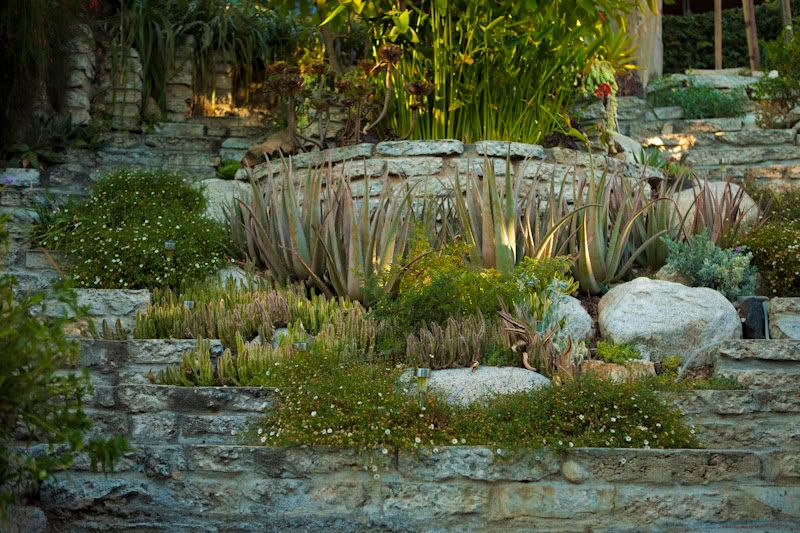
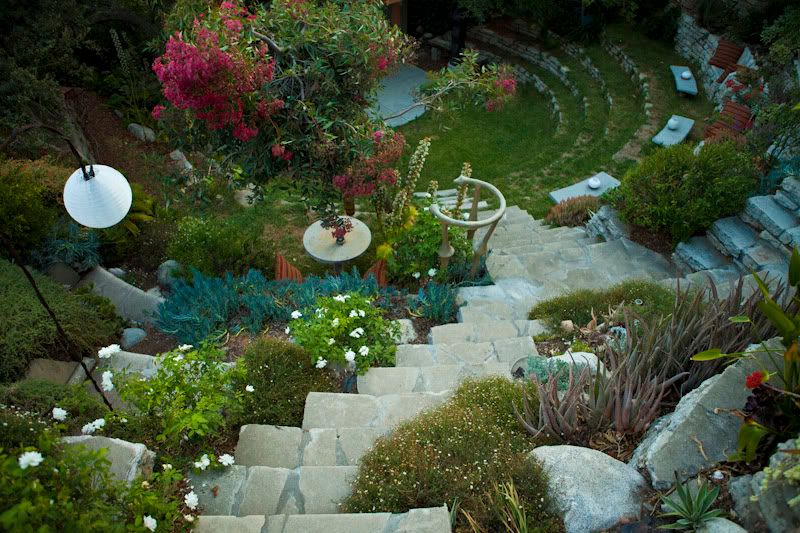
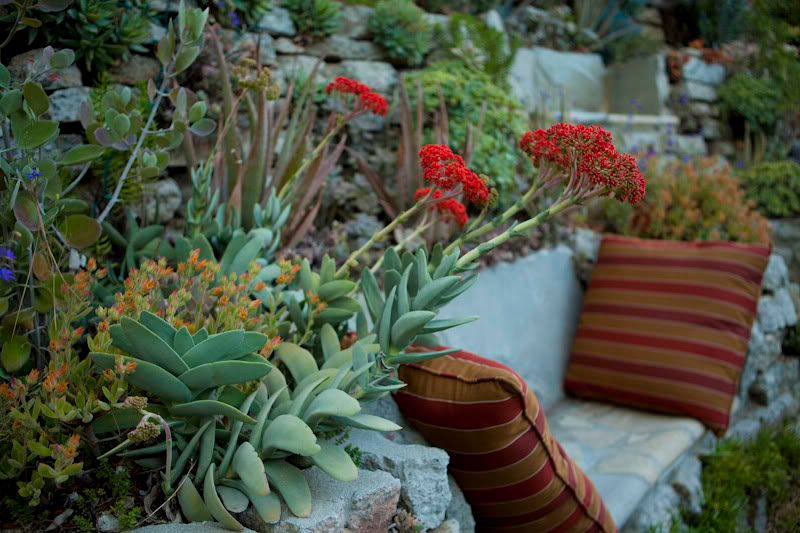
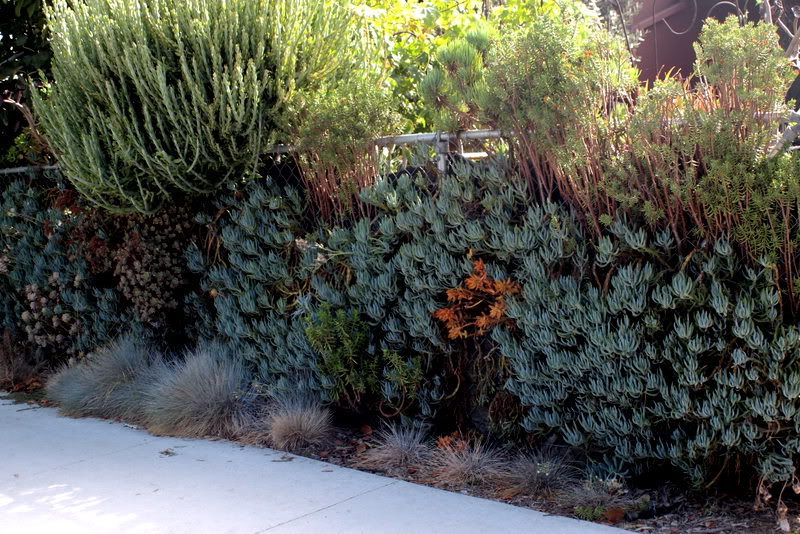
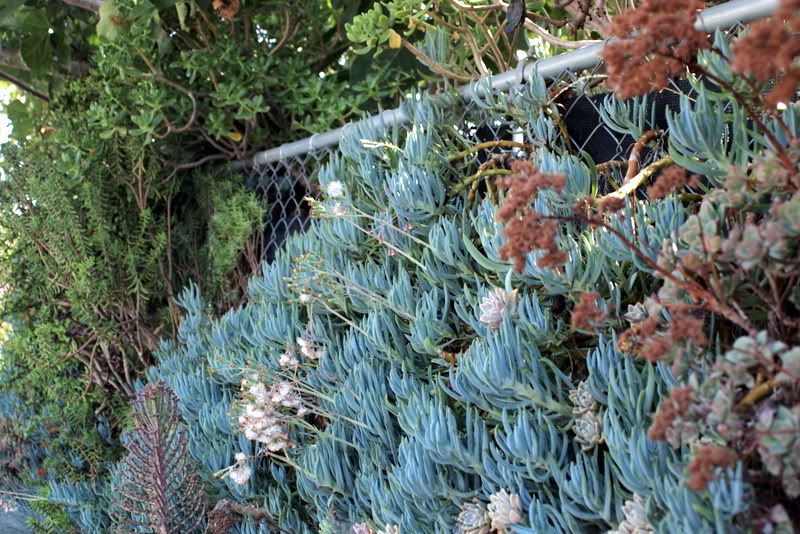
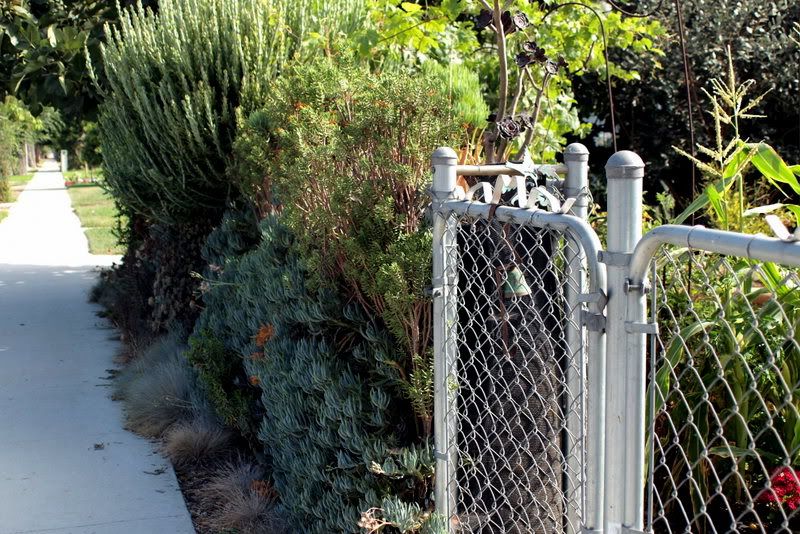
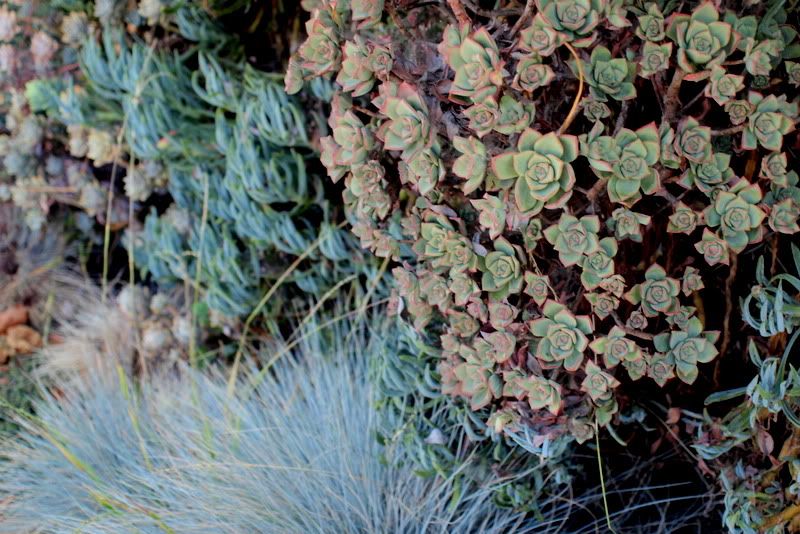
MB Maher paid a visit to the home of Southern California landscape designer Dustin Gimbel of Second Nature Garden Design, as part of an ongoing series of photographic house calls to landscape designers.

Photobucket

Dustin has an amazingly stellar background in horticulture, including stints working with John Greenlee, at Heronswood, Great Dixter, and taking a diploma from the Royal Horticultural Society’s main garden at Wisley (or “Wizzers” as the locals call it).

Photobucket

Photobucket

His recently purchased home serves as both nursery and design laboratory.

Photobucket

Photobucket

Photobucket

I actually bought plants from Dustin when he was no more than a kid working at the late Mary Lou Heard’s wonderful nursery in Westminster, California, over a decade ago, and even then it was obvious that this was a person clearly besotted with plants.

Posted in MB Maher, The Hortorialist | Tagged , | 2 Comments

Dahlias, Dahling

I have this one dahlia that came back this spring. Bought at a spring 2009 garden show. I’ve pored over the skimpy 2009 garden notebook but apparently didn’t write down the name, if it was even labeled. A font of information as usual, but aren’t dahlias nice? Doesn’t its exotic looks make you want to wrap your head in a turban like Gloria Swanson and throw on a caftan? Or maybe since the dahlia is from Mexico, perhaps dressing Tehuana style like Frida Kahlo would be more appropriate. Heck, if summer finds me in anything other than dirty gardening jeans, it counts as festive.

Photobucket

The dahlia is deep mid bed, so the oblique view is not artistic but just a reluctance to step into the garden for a better shot. Clay compacts surprisingly fast. And don’t let this long-necked beauty’s voluptuous looks blind you to the essential requirement of firm support. Unseen in this photo is the gauche use of a length of rebar for staking. One well-grown, well-supported dahlia can put on quite a lengthy show in a small garden.

Photobucket

Some dahlias do well wintering over in the garden in zone 10. Frost isn’t a problem because there isn’t any, but heavy, wet soil can be. I had a ‘Thomas Edison’ who loved wintering over in situ, and I see dahlias grown in the ground year-round in the neighborhood. It’s case-by-case experimentation, because some dahlias simply will not tolerate overwintering in the ground. All three tubers from 2009 were wintered in pots, all came through firm and looked ready to grow, but only this one wasn’t kidding. They were all this color, so no matter really. I’d guess this one might be classified a waterlily type, but I could be wrong since I don’t bother much with the various classifications. My only requirement is that the flower be on the smaller side, not the ginormous dinnerplate dahlias, and I confess to pursuing the darker-petaled, burgundy colors. The height of luxury is choosing them “in the petal,” which I had the good fortune to do many years ago at Swan Island’s annual Dahlia Festival, which is held later in the summer, August and September.

And these exotic beauties are absolute pigs for compost, the more manure in the compost the better.

Posted in Plant Portraits | Tagged , | 2 Comments

Monkey Business

The monkey flower planted into the ground has clambered up into the arms of a potted helichrysum.

Photobucket

I like promoting such intimate relationships between the grounded and the potted. The mimulus thrives in the slightly heavy clay of the garden. Pot life would suit it fine as well, but it’d want a lot more water. The Helichrysum petiolare is a dwarf and is getting a bit woody, so may have to be restarted soon from cuttings, but I prefer the dwarf’s light tracery of branches to the engulfing growth of the species. Living in the pot year-round with the helichrysum are some aeoniums and a little manihot tree, unseen in the photo, whose leaves sprout comically at the end of its very slender 4-foot trunk. The manihot is nothing but a stick to look at all winter, so I probably won’t plant it into the garden. But what fantastic shadow play its leaves will make in summer with just a bit more heat to bring on growth. Just a few blooms of the mimulus really livens things up. Later on in the season a red iochroma will be in bloom behind the pot, the big leaves to the left. I really enjoy these small, incremental changes summer brings. In a long growing season, summer doesn’t have to be about masses of blooming annuals, especially not with our current water restrictions.

Photobucket

A photo of the aeoniums and helichrysum taken earlier in January this year shows a much greener aeonium.

Photobucket

The dark red mimulus is probably a hybrid of our native Mimulus aurantiacus.

Posted in Plant Portraits | Tagged , , | 2 Comments

Succulents on Ice

Glass mulch can be a pricy indulgence, one I don’t often make. But I was recently given a pound of some icy mulch from Building REsources in San Francisco. Why can’t I always get presents like this? What luxury to plunge one’s hands into a whole sack of this stuff and dress up whatever pot needs a little icing. Rich as Croesus is how I feel.

Photobucket

Icy chips for Senecio medley-woodii and Sedum dasyphyllum var. major.

Photobucket

This Aeonium balsamiferum used to be upright, a tower of leafy rosettes, but then maturity and gravity caused its branches to tumble down (happens to plants too), which exposed bare soil on the surface of the pot.

Photobucket

Today when I passed by the collapsed aeonium pot, I remembered that, for the moment at least, I was flush with glass mulch. This hand-thrown pot, brought back in a suitcase from an English pottery, made the trip back intact, only to get chipped here at home, but the aeonium now happily exploits the flaw and spills through the breach. I ultimately decided to tuck in a couple echeverias I had handy into the soil around its collapsed branches. And then I topped it off with a little glass mulch for good measure.

Photobucket

Just like everything else horticultural, fine glass and stone mulches can be addicting. There’s a new store in town, Exotic Pebbles & Aggregates that I can’t wait to check out.

Posted in succulents | Tagged , , , | 4 Comments

Concentrated Color

Antique tiles from the California Heritage Museum’s 10th annual Antique and Contemporary Tile sale held this past weekend in Santa Monica, California.

PhotobucketPhotobucketPhotobucketPhotobucketPhotobucketPhotobucketPhotobucketPhotobucket

Posted in Ephemera | Tagged | 2 Comments

Where’d I Leave My Narciscissors?

The winning caption in the June 14 issue of The New Yorker.

Photobucket

That’s it. I’m returning those narciscissors today!” Ryan Carroll, Chicago, Illinois.

Posted in Ephemera | 1 Comment

June 2010 Bloom Day

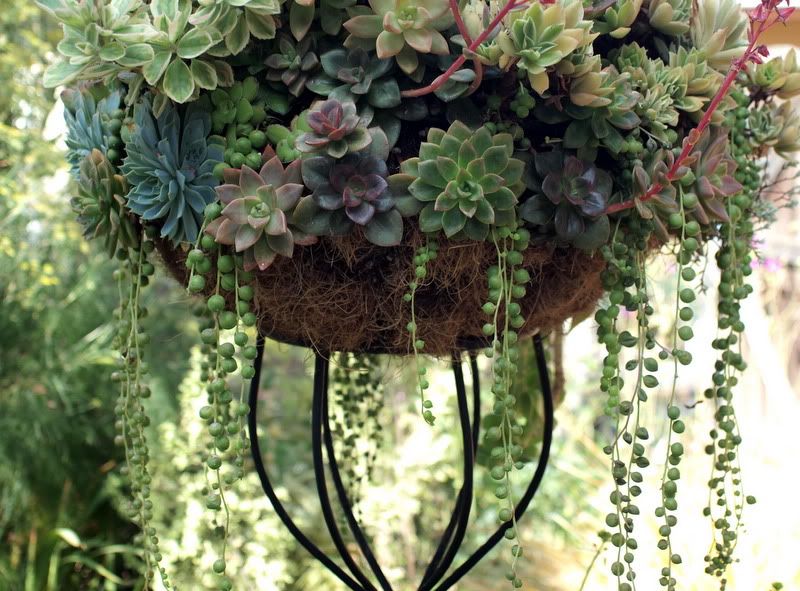
A 2-year-old mossed basket with sedums, agave, and oregano ‘Kent Beauty.’ I was surprised to see the oregano return this year. Life in a mossed basket can be rough.

Photobucket

The urns of arctoctis. Hopefully, the next time I replant the urns will be the day after Thanksgiving, to fill them with tulips. July is not too early to get a tulip order in for the best bulbs!

Photobucket

Salvia verticillata ‘Purple Rain’ and Libertia peregrinans. This libertia actually is in bloom, tiny and white, but it’s the tawny leaves I’m after.

Photobucket

Crocosmia just budding up, different kinds of forgotten names. Running in ribbons throughout, not in big clumps. I’m always amazed they find their way up and through at all in June.

Photobucket

Continue reading

Posted in Bloom Day, Plant Portraits | Tagged , , , , , , , , , , , , , , , , , , , , , , , , , | 10 Comments

Poppy Music

I’ve held on to these little poppies as long as possible, and tonight they were given a photographic bon voyage by MB Maher.
When it’s twilight, magic hour, the garden becomes an open-air studio. I handled the linen backdrop. A few blades of Miscanthus ‘Gold Bar’ strayed into frame.

Photobucket

Poppy ruprifragum still blooms in the front garden, but the back garden’s poppies are all rustling seedpods. These are the seedpods of Papaver setigerum, left to decline in situ, although lower leaves are stripped off when decrepitude becomes too unsightly or insect ridden. As I’ve written before, this little poppy tucks itself in unobtrusively and doesn’t lean on or brawl with neighbors like so many of the bigger somniferum varieties, so a few plants have been allowed to remain. Not that I need any more seed, but running a hand along the pods releases their percussive music, different tones emanating from seedpods of plants of varying age.

Posted in MB Maher | Tagged | 1 Comment

So I Go Out To Buy A Hosta

…and come home with an astelia.

Photobucket

Astelia banksii.

Hostas intrigue me because, in Zone 10 gardening manuals, they can reliably be found under the entry “When Pigs Can Fly.” Yet there’s always a few for sale at nurseries in spring, usually some unhappy-looking, decrepit specimens, no doubt unhappy because they know they’re soon to be sacrificed on the altar of some transplanted Easterner’s nostalgic case of raging zonal denial. Now, I’m a native zone-10-er, and I try to make a garden that revels in its zone. But it hasn’t escaped my notice that everyone seems to be growing and attempting to overwinter zone 10 plants, so why not the reverse in zone 10? Tender perennials are grown as annuals out of their hardiness range, so why not cold-hardy perennials grown as annuals in zone 10? I’m not interested in the hosta’s flowers, which a young plant may or may not produce, just the leaves. Over the mild winter, the hosta will succumb to sleep deprivation, when their required dormancy fails to initiate. Whatever else a garden may be, and I’ll probably die with that question on my lips like Charles Foster Kane, it is to begin with an artificial construct.

I’ve been mulling this over and thinking that trying out a single hosta in a pot this summer might be an interesting experiment. In terms of waste, most tulips are grown as annuals, are they not? And the hosta can feed the compost pile over the winter. If the potted hosta sat in a saucer of water in light shade, it just might be deceived into believing it was back home somewhere in Japan. And I’d have a summer’s worth of gazing into those exotic, pleated leaves. What a deal.

And just this week, Margaret Roach, on her blog A Way To Garden, revealed that she prefers her hostas potted. That was all the incentive needed. (Thank you, Margaret!)

I did indeed find hostas at a neighborhood nursery just a few blocks away, and they were indeed miserable specimens. I had to check the label for variety, because all variegation or blueness to leaf had bleached out in the full-sun treatment they were being given. I grabbed the best-looking sieboldiana they had, then made a perfunctory check of the nursery before heading to the cash register.

Oh, my. The succulent section had lots of new arrivals. Hard to believe, but local nurseries are just now catching on that succulent mania has swept the nation. Bit of a cognitive delay. But now the rare stuff is finally trickling in. I steered clear of the expensive stuff, but what nice sedums they had! This one, labeled ‘Blue Mini Rosette,’ most likely S. pachyclados, resembling a saxifrage, obligingly filled a gaping hole in a pot of Sticks on Fire. (In a small garden, any expanse of soil over 3 inches is considered gaping.)

Photobucket

Might as well check out the shrubs too. What’s that glinting silvery in the mid-afternoon sun? Oh, sure, the expensive astelias. What? You say you’re in a gallon? Lordy, let’s go!

In its gallon size, the astelia was a couple bucks more than the hosta. Bye-bye hosta. I still think it’s a worthy experiment, but I’ll take reveling in my zone versus a lab experiment any day. I completely understand the experimentation by those in colder zones, with temps slipping and sliding all over the map, and where would horticulture be without the yearning for the foreign and strange?

Photobucket

Posted in Plant Portraits | Tagged , | 6 Comments